
As the global community convened at COP30 in Belém, Brazil, one truth was undeniable: climate action and food security are inseparable. Across Africa, the impacts are urgent and profoundly human. Over 250 million people face hunger or severe food insecurity. In East Africa, prolonged droughts have wiped out more than four million livestock, while destructive floods and storms in Southern Africa have displaced tens of thousands of families. Rising temperatures are shrinking arable land, contaminating water, and undermining livelihoods, pushing already vulnerable communities closer to the brink.
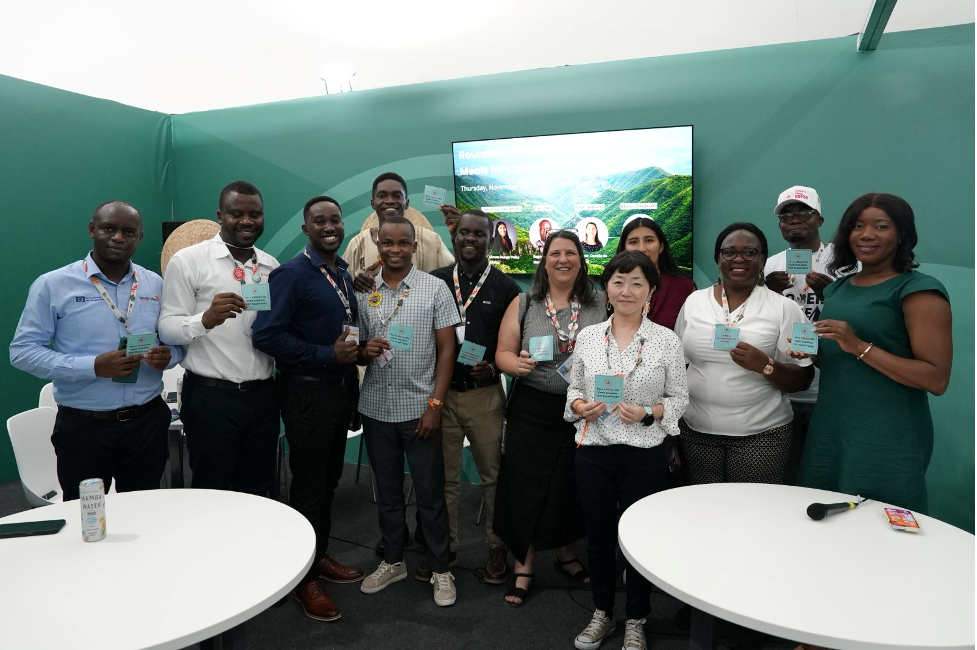
While negotiations unfolded in polished halls, African families continued to face daily climate shocks that threaten their most basic needs: food, water, and dignity. Farmers, pastoralists, fisherfolk, and traditional food producers, the very people who feed the continent, bear the heaviest burden of a crisis they did not create. It is within this reality that GreenFaith Africa stood resolute at COP30, asserting that any credible climate response must protect the people and systems sustaining life across the continent.
Faith as Guardian of Food and Community
At the Action on Food Hub panel on Climate and Nutrition, Dr. Pius Oko, Program Manager at GreenFaith Africa, delivered a compelling narrative on safeguarding traditional food systems for a resilient future. He reminded the world that African food systems hold centuries of wisdom, spirituality, and resilience, now under assault from climate shocks, environmental degradation, and fossil fuel expansion.

“In our communities, food is prayer, memory, and identity. To protect food is to protect life itself,” Dr. Pius emphasized. His message resonated widely: climate justice cannot exist without nutrition justice. Faith shapes African ways of planting, harvesting, sharing, and protecting food. Across the continent, faith leaders are linking scripture to climate-smart action.
A Kenyan Christian bishop once affirmed, “God entrusted the land to us, not to exploit but to preserve. When we save seeds, we save the future.” An imam from northern Nigeria added, “Feeding the hungry is a holy duty. Destroying land and water violates that duty.” These voices underscore a powerful truth: faith communities are the moral backbone of climate–nutrition action.
Dr. Pius highlighted how spiritual teachings guide farmers through unpredictable seasons, inspire women’s seed-saving movements, and strengthen collective farming networks that protect families from exploitation. “Faith does not just comfort people in crisis, it organizes them. It gives communities the courage to stand firm against those who harm their land, water, and food systems.”
Food Systems, Identity, and Survival
Behind policy documents lie the human stories that demand urgent attention. Mothers struggle to feed children as crops wither under droughts. Farmers lose entire harvests to unprecedented heat waves. Pastoralists watch once-reliable grazing lands disappear. Fisherfolk confront rivers and coastlines that were once abundant but are now increasingly barren. Elders mourn the loss of indigenous foods, carrying not just nutrition but cultural identity and memory.
These are not distant, theoretical challenges; they are the daily reality for millions of Africans. Fossil fuel pollution, land dispossession, and intensifying climate disasters threaten more than food systems, they threaten identity, dignity, and community continuity. As a Tanzanian faith elder reflected, “When a community loses its food, it loses its story.”
One Plate, One Planet, One Future
At COP30, GreenFaith Africa reaffirmed that climate justice and nutrition justice are inseparable. Africa’s future depends on safeguarding traditional food systems, defending community dignity, and confronting the escalating harms caused by fossil fuel expansion. Faith leaders preach stewardship and responsibility; women preserve ancestral seeds; youth pioneer climate-smart solutions; and frontline food producers continue to protect ecosystems despite mounting challenges.
GreenFaith Africa calls on world leaders to take bold, transformative action:
- Halt harmful fossil fuel projects.
- Protect communities from environmental harm.
- Ensure climate finance reaches frontline food producers.
- Recognize faith communities as essential partners in climate–nutrition action.
- Prioritize agroecology as a central pillar of climate adaptation and food system resilience.
Agroecology, grounded in ecological balance, indigenous knowledge, and sustainable farming, restores soils, strengthens biodiversity, empowers smallholder farmers, and reduces dependence on industrial practices. Investing in agroecology is not just a strategy, it is a moral obligation to safeguard Africa’s future.
The road ahead demands courage, unity, and moral leadership. To protect food is to protect life, and life, in every faith tradition, is sacred. A resilient, just, and sustainable Africa is within reach. The time to act is now.