
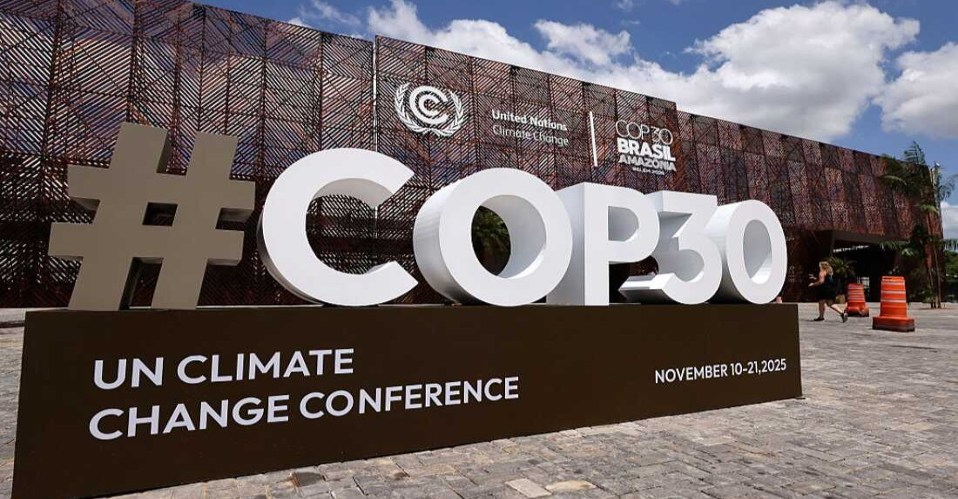
The Moment of Reckoning
As the world gathers in Belém, Brazil, for COP30, a historic moment in the Amazon, the planet’s green lungs, there is a palpable sense that this is not just another climate conference. It is a reckoning, COP30.
Dubbed “The COP of Truth,” this year’s summit carries the weight of humanity’s moral conscience.
Research has been done, pledges have been made, the science is unequivocal, yet the gap between what we say and what we do has never been more glaring.
For the first time, the global conversation feels less about data and more about decency.
Less about carbon and more about conscience.
It is, in essence, the world’s first Global Ethical Stocktake, an unspoken audit not of emissions, but of integrity.
Beyond the Technical: Enter the Ethical Stocktake
The Paris Agreement’s Global Stocktake revealed a sobering truth: the world is far off course, heading toward more than 2.3°C of warming, a moral and existential failure.
But beneath the Numbers and pledges lies another form of accounting, the ethical one.
This stock take measures not CO₂ but compassion; not just mitigation, but moral courage.
It asks:
- Have nations acted in truth and fairness?
- Have the wealthy polluters honoured their promises to the poor?
- Have we centred the voices of those most affected in the grassroots community, or merely invited them to observe their own suffering?
In this moral ledger, the results are mixed.
The ethical balance sheet exposes a profound disparity between commitment and compassion, between climate ambition and moral action.
Faith Voices at COP30: Intentional but Unequal
Across the forests of the Amazon, from cathedrals to mosques, temples to Indigenous sacred lands, faith voices have been intentionally and sincerely mobilising toward COP30.
At GreenFaith Africa, we have made a call for COP30 to be “a People’s COP” one grounded in Morality, Justice, restoration, and right relationship with creation.
The World Council of Churches, Christian Aid, Acts Alliance, Inter religious Council the Interfaith Rainforest Initiative have all opened pathways for youth, women, and grassroots communities of faith to engage meaningfully.
This is intentional representation, deliberate, structured, and morally grounded.
It shows a growing global recognition that faith communities are indispensable partners in climate action.
Yet, sincerity does not always translate into influence.
From Representation to Real Power
While faith actors are present at COP30 ,in plenaries, side events, and People’s Summits, the question remains: Do they shape outcomes or simply sanctify them?
Representation without influence can not drive change.
Faith leaders speak at side panels, but seldom are they invited in negotiation rooms where decisions are finalised.
The ethical wisdom of faith care for creation, stewardship, equity often echoes outside, not inside, the halls of power.
Moreover, faith engagement still faces depth and equity gaps:
- Geographic inequity: Many African and Asian faith groups remain on the periphery due to limited resources and coordination.
- Gender imbalance: Even within faith representation, women’s moral and theological voices though essential, remain under-amplified.
- Narrative gap: Policymakers often engage faith groups as “moral supporters,” not as equal architects of climate policy.
This lack of depth undermines the transformative power faith communities could bring.
After all, faith is the only global language that binds moral duty with daily practice.
Why Faith Still Matters
Amid political interests and diplomatic repetition, faith remains the moral compass the world desperately needs.
Faith actors translate climate change from the language of science to the language of sacred duty.
They speak not of Climate business but of human dignity, justice, and care for the Earth.
They connect hearts to hands from pulpits to protests, from prayers to policy.
And most importantly, faith communities operate where governments cannot ,deep within the moral consciousness of societies.
If the COP of Truth is to birth real transformation, it will not come from negotiations alone but from moral renewal, the conversion of hearts as much as the transition of economies.
Africa’s Faith Mandate in the COP of Truth
For Africa and for faith-rooted movements this is both a challenge and a calling.
The African continent, least responsible yet most affected, embodies the moral urgency of the climate crisis.
From polluted lands to rising lakes, from displaced families to failed harvests, Africa is living the consequences of global ethical failure.
Yet Africa’s faith communities are rising. From women of faith leading renewable energy campaigns to interfaith coalitions demanding an end to fossil fuel expansion, they bring not just resistance, but hope.
Their message to COP30 is clear: Climate justice is not optional. It is sacred duty.
Toward an Ethical Reformation
The world does not need another agreement; it needs alignment , between belief and behaviour, between commitment and compassion.
The Global Ethical Stocktake is not a formal UNFCCC process ,it is a collective awakening, a moral mirror held up by humanity to itself.
Faith voices at COP30 are the custodians of that mirror.
Their influence may not yet be fully realised, but their presence is prophetic, unsettling, inspiring, and necessary.
For the COP of Truth to bear fruit, the world must listen not just to politicians, economists and scientist, but to Faith leaders, Faith Communities, and the Earth itself.
A Call to Conscience
The COP of Truth is not asking the world to do more.
It is asking the world to mean what it says.
This is the hour for ethical leadership, for leaders to move from ambition to accountability, from words to witness, from promises to justice.
And when the Belém Declaration is finaly proclaimed, history will not judge by the number of pages in the agreement, but by the number of lives that changed because of it.