
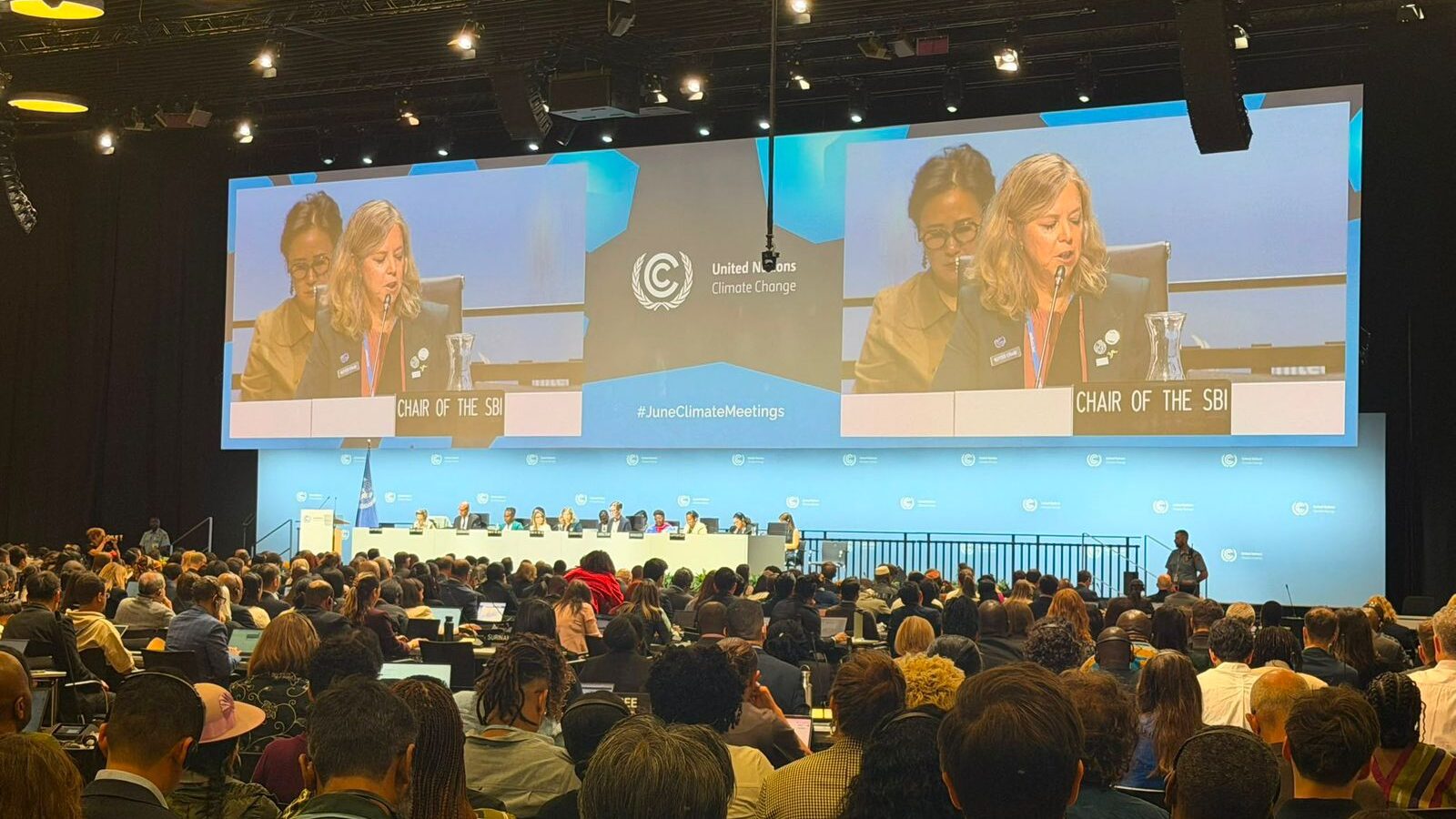
The annual UN Climate Change intersessional meetings in Bonn are often described as technical negotiations. Yet for millions of people across Africa living through drought, floods, hunger, displacement, and rising energy poverty, there is nothing technical about the climate crisis – it is our daily lives.
The Bonn Climate Meetings (SB64) come at a defining moment for global climate action. They serve as the bridge between COP30 in Belém and COP31 in Antalya, helping shape decisions on adaptation, finance, just transition, resilience, and implementation. More importantly, they offer a critical opportunity for the international community to demonstrate whether multilateralism can still deliver for those on the frontlines of climate impacts. For Africa’s faith communities, grassroots movements, and climate-vulnerable populations, the question is no longer whether climate change is happening. The question is whether the world’s leaders possess the moral courage and political will to act at the scale and speed that science, justice, and humanity demand.
A Crisis Africa Did Not Create
Africa contributes less than 4 percent of global greenhouse gas emissions, yet bears some of the most devastating consequences of climate change. The continent is experiencing increasingly severe droughts, floods, food insecurity, ecosystem collapse, and displacement. Communities that have contributed the least to the crisis continue to pay its highest price.
This reality is not merely an environmental challenge. It is a profound moral failure. Every delayed decision in Bonn translates into lost harvests in Kenya, displacement in South Sudan, water scarcity in the Horn of Africa, and deepening poverty across vulnerable communities. Climate change is increasingly becoming a multiplier of inequality, threatening decades of development gains and eroding human dignity. The Bonn negotiations must therefore be guided not only by technical expertise but by a clear commitment to climate justice.
Energy Access Must Be at the Heart of the Transition
One of the most significant outcomes of recent climate negotiations has been the growing international recognition that the fossil fuel era must come to an end. Yet for Africa, the conversation cannot simply be about what we phase out or down; it must also be about what we build, who benefits, and who gains access. The science remains unequivocal: limiting global warming to 1.5°C requires a rapid reduction in fossil fuel production and consumption. Every new coal mine, oil field, and gas expansion project moves the world further from climate safety and deeper into climate injustice. However, climate action that fails to address energy poverty and worker conditions risks creating a different form of injustice for millions who still live without reliable electricity or clean cooking solutions. For GreenFaith Africa, Bonn must reinforce two inseparable truths: the fossil fuel era must end, and universal access to affordable, reliable, accessible and sustainable energy must be accelerated. Climate stability and energy dignity must advance together.
Africa does not need a future built on stranded fossil fuel assets and extractive development models that enrich a few while leaving communities exposed to pollution, displacement, and climate impacts. Nor does it need a transition that overlooks the daily realities of families studying by candlelight, health facilities operating without power, or women and girls spending hours collecting firewood. Africa needs investment in decentralized renewable energy systems, community-owned power generation, clean cooking solutions, and energy infrastructure that places people before profits.
More than 600 million Africans still lack access to electricity, while nearly one billion lack access to clean cooking technologies. These figures represent more than an energy deficit; they represent lost opportunities, compromised health, constrained livelihoods, and diminished human dignity. Addressing these realities requires accelerated investments in renewable energy – not expanded dependence on fossil fuels whose benefits rarely reach the most vulnerable communities. A truly just energy transition must therefore be measured not only by emissions reduced, but by lives improved. It must simultaneously reduce emissions, eradicate energy poverty, create decent jobs, strengthen local economies, and ensure that no community is left behind. Access must be the defining principle of the transition.
Bonn must therefore advance the implementation of the Just Transition agenda, ensuring that workers, communities, women, youth, Indigenous Peoples, and faith actors are meaningfully included in shaping climate solutions. Discussions under the Just Transition Work Programme provide a critical opportunity to move beyond rhetoric and establish pathways that deliver both climate ambition and universal energy access. The success of the transition will ultimately depend not on how quickly fossil fuels are phased out alone, but on how effectively clean, affordable, and accessible energy reaches those who have been excluded for far too long.
Climate Finance: The Measure of Trust
Nothing will determine the success of global climate cooperation more than finance. For years, developing countries have heard promises. They have heard commitments. They have heard declarations of solidarity. Yet climate finance continues to fall far short of actual needs. Yet, the climate crisis is already imposing enormous costs on African countries through disaster response, infrastructure destruction, agricultural losses, and adaptation measures.
According to the African Development Bank, climate change could cost African economies between 5 and 15 percent of GDP annually by 2030. Without substantial increases in accessible, predictable, and grant-based finance, climate resilience will remain out of reach for many vulnerable communities. This is precisely why the Bonn intersessions matter. Bonn is where negotiators undertake the detailed work that will shape finance outcomes at COP31, including advancing discussions under the Baku to Belém Roadmap on scaling climate finance to developing countries and operationalizing the New Collective Quantified Goal (NCQG) agreed at COP29. For African countries, the central question remains whether climate finance will be delivered at the scale, quality, and accessibility required to meet adaptation, mitigation, and loss and damage needs.
Equally important at Bonn is the continuation of the Sharm el-Sheikh Dialogue on Article 2.1(c) of the Paris Agreement, which seeks to make financial flows consistent with pathways toward low greenhouse gas emissions and climate-resilient development. While this objective is often framed in technical financial language, its implications are profoundly political and moral. For GreenFaith Africa, aligning financial flows with climate goals cannot become a backdoor justification for continued investments in fossil fuel expansion. Article 2.1(c) must accelerate the redirection of public and private finance away from coal, oil, and gas and toward renewable energy, community resilience, and people-centered development.
The Bonn meetings will also advance discussions under the two-year work programme on climate finance, established to strengthen transparency, accountability, and implementation of finance commitments. While these discussions including defining their scope, modalities and terms of engagement are critical, the climate crisis will not wait for procedural timelines. Every season of delay carries real consequences for communities already grappling with droughts, floods, food insecurity, and displacement. Climate finance cannot remain an exercise in accounting or reporting; it must be measured by its ability to reach those on the frontlines and strengthen their resilience. The true test of these negotiations is not what is agreed on paper, but whether farmers can protect their livelihoods, whether vulnerable households can recover from climate shocks, and whether communities can adapt before the next disaster strikes.
Climate finance cannot continue to be measured solely by amounts pledged. It must be measured by whether smallholder farmers can withstand drought, whether communities can recover from floods, whether women can access resilient livelihoods, and whether future generations inherit a livable planet. The true currency of climate finance is trust. And trust is running dangerously low.
Funding Arrangement for Addressing Loss and Damage: The Human Face of Climate Justice
Perhaps nowhere will the credibility of the Bonn Climate Talks be tested more than in discussions around the funding arrangements for addressing Loss and Damage and the emerging pathways for implementing the outcomes of the Global Stocktake through the fund, including the Barbados Implementation Mechanism (BIM). For communities across Africa, these issues are not separate negotiating tracks. They are deeply interconnected realities that determine whether people can withstand climate shocks, recover from disasters, and build resilient futures.
When floods wash away homes in Nigeria, when prolonged drought destroys livelihoods in Kenya, when cyclones devastate communities in Malawi, the consequences extend far beyond environmental damage. Families lose income, children drop out of school, food insecurity rises, and already fragile social protection systems come under immense strain. Climate impacts quickly become social and economic crises.
This is why Bonn must advance discussions under the Warsaw International Mechanism (WIM), the Santiago Network, the broader funding arrangements for addressing Loss and Damage, and the operationalization of the Barbados Implementation Mechanism with a renewed sense of urgency. At a time when trust in multilateralism is under pressure, the mechanism offers an opportunity to strengthen transparency around commitments and ensure that climate action translates into measurable outcomes for vulnerable communities. Let’s not forget, the establishment of the Loss and Damage Fund was a historic step, but communities at the frontlines need more than institutional milestones. They need resources that are accessible, predictable, grant-based, and capable of reaching affected populations quickly and equitably. They also need implementation frameworks that ensure commitments made in negotiating halls are reflected in real investments on the ground.
The reality is stark. According to the World Meteorological Organization, weather, climate, and water-related hazards have affected hundreds of millions of Africans over recent decades, causing billions of dollars in economic losses while deepening poverty and inequality. At the same time, the African Development Bank estimates that the continent requires up to US$277 billion annually for climate adaptation by 2030, yet current adaptation finance flows remain only a fraction of that need. Many countries facing the greatest climate impacts continue to spend more servicing debt than investing in resilience and recovery.
This is where climate finance, Funding Arrangement for addressing Loss and Damage and social protection converge. A farmer who loses an entire harvest to drought does not experience climate finance, adaptation, and Loss and Damage as separate concepts. What matters is whether support arrives in time to prevent hunger, displacement, or destitution. A family displaced by floods needs immediate assistance, long-term recovery support, and protection from falling deeper into poverty. Effective climate action therefore requires systems that connect finance with people, policy with protection, and global commitments with local realities. The Barbados Implementation Mechanism can help bridge this gap by strengthening accountability for delivery and ensuring that implementation remains at the centre of climate negotiations.
GreenFaith Africa believes that climate-responsive social protection must become a cornerstone of climate resilience. Social protection systems; including cash transfers, disaster response mechanisms, livelihood support programmes, and community-based safety nets; can help households absorb shocks, recover from losses, and adapt to a changing climate. Faith institutions and community networks already play a critical role in providing this support, often reaching vulnerable populations long before formal assistance arrives.
As negotiators deliberate in Bonn, they must recognize that addressing Loss and Damage is not only about compensating for climate impacts. It is about protecting human dignity. It is about ensuring that climate finance strengthens resilience before disasters strike and supports recovery when adaptation limits have been exceeded. It is about operationalizing mechanisms that hold the international community accountable for delivering on its promises. And it is about building systems that leave no one behind during the transition to a climate-safe future. Communities cannot recover without resources. Families cannot adapt without protection. And climate justice cannot be achieved if those suffering the greatest losses are left to bear the burden alone.
The success of Bonn will therefore not be measured solely by technical progress in negotiating rooms. It will be measured by whether the outcomes strengthen the financial and social foundations that enable vulnerable communities to survive, recover, and thrive in the face of an escalating climate crisis; and whether mechanisms such as the Barbados Implementation Mechanism help transform climate commitments into tangible action for those who need it most.
Why Moral Leadership Matters More Than Ever
The world enters Bonn amid geopolitical uncertainty, economic pressures, conflicts, and growing skepticism about international cooperation. Yet climate change does not pause for political convenience. The climate crisis continues to accelerate regardless of election cycles, diplomatic tensions, or fiscal debates. This is why Bonn must send a signal far beyond negotiating rooms and technical workshops. It must demonstrate that climate multilateralism remains strong, that international cooperation remains possible, and that the world has not abandoned its commitment to collective action. UN Climate Change leadership has repeatedly emphasized the need for COP31 and the Bonn process to demonstrate that climate multilateralism remains effective despite global challenges. Faith communities understand something that negotiators sometimes forget: climate action is ultimately about values. It is about stewardship over exploitation. Solidarity over self-interest. Justice over convenience and hope over indifference.
The Bonn climate talks may be technical, but their consequences are profoundly human. They will shape whether a child eats after a failed harvest, whether a family can rebuild after a flood, whether a community can access clean energy, and whether future generations inherit a livable planet. For people of faith, climate action is not simply a policy choice; it is a moral obligation. The challenge before Bonn is therefore not another assessment of the problem, but provision of the solutions for implementation. To this extent, Bonn must send a signal of strength, unity of purpose, and moral standing. The world is watching. Africa is waiting. And history is keeping score.
By Meryne Warah
Meryne Warah is the Executive Director at GreenFaith Africa