
As we left for Bonn, we said that though technical, the Bonn Climate Dialogues were critical. We argued that the conversations taking place in negotiating rooms would ultimately determine whether a farmer in Turkana could survive another failed rainy season, whether a family displaced by floods in Nigeria could rebuild their lives, whether communities across Malawi, Mozambique, Madagascar and the Horn of Africa could adapt before the next climate disaster strikes. We said the success of Bonn would not be measured by the number of agenda items concluded, but by whether the negotiations strengthened trust, accelerated implementation, and reaffirmed the moral purpose of climate multilateralism.
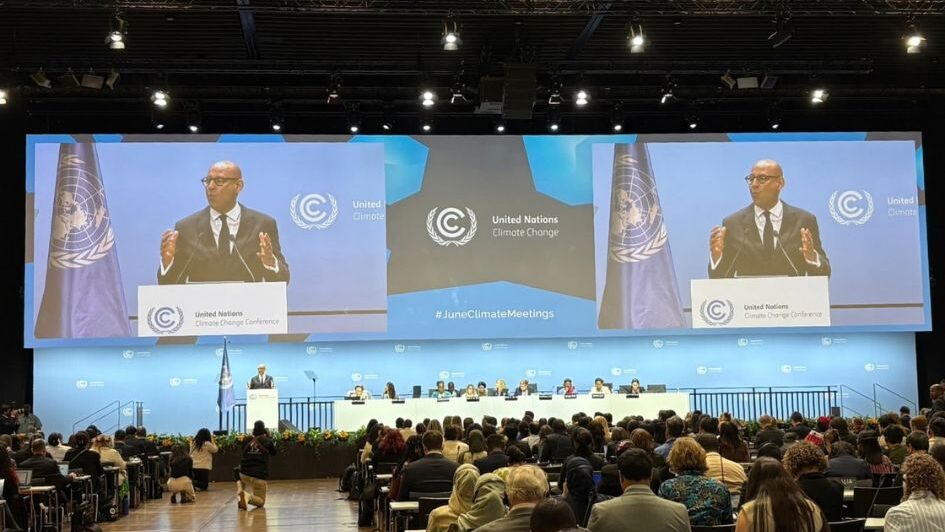
A few days after reflecting deeply on what Bonn delivered (and what it did not) one question still lingers. Did we move closer to justice? The answer, regrettably, is not enough.
The Bonn Climate Dialogues once again demonstrated the resilience of the multilateral process. Negotiators worked through complex technical issues, draft texts were refined, and discussions continued across multiple work streams. But for communities already living through the climate crisis, technical progress without political courage offers little comfort. The climate emergency is accelerating far faster than our collective willingness to respond.
Adaptation: The Frontline of Survival and Dignity
Perhaps nowhere was this more evident than on adaptation. For Africa, adaptation is not an abstract policy discussion. It is the difference between a harvest and hunger, between resilience and displacement, between hope and despair. Across the continent, communities are investing their own scarce resources to restore ecosystems, harvest water, diversify livelihoods, and protect themselves from increasingly unpredictable weather. Yet adaptation cannot continue to depend on the resilience of vulnerable people alone.
Bonn was expected to advance concrete decisions on adaptation, including strengthening financial support through existing mechanisms. Instead, negotiations once again fell short of matching the urgency of the moment. At a time when developing countries continue to call for adaptation finance to be scaled up; including commitments to significantly increase resources through the Adaptation Fund; the pace of political decision-making remains painfully slow.
For communities on the frontlines, delay has consequences. Every postponed decision means another planting season without climate-resilient seeds. Another community without early warning systems. Another school damaged by floods. Another health facility struggling through extreme heat. Take it from me; an African woman; adaptation delayed is resilience denied.
Loss and Damage: The Human Face of Climate Justice
Yet perhaps the greatest paradox emerging from Bonn is that while science tells us we are approaching; and in many places have already reached; the limits of adaptation, the negotiations failed even to include a dedicated agenda item on Loss and Damage. This omission should concern us all. There comes a point where adaptation is no longer enough. We cannot adapt to lives lost in floods. We cannot adapt to ancestral lands swallowed by rising seas. We cannot adapt to children pulled out of school because their families have lost everything to drought, or to women walking farther each season in search of water that is no longer there. We cannot adapt to the grief of pastoralist communities watching livestock die, to farmers planting into dry soil year after year, or to coastal families forced to leave behind homes, graves, and histories that cannot be moved. Across Africa, communities are increasingly confronting irreversible losses that cannot be prevented through adaptation measures alone.
This is why Loss and Damage is not a side issue. It is a moral and political necessity. It speaks to the reality that some harms are already beyond adaptation, and that those who have contributed least to the crisis should not be left to carry its most devastating consequences alone. When the formal agenda does not even make space for this conversation, it sends a troubling message: that the suffering of vulnerable communities can still be postponed, managed, or quietly absorbed into technical process. But loss is not technical. It is human. It is the mother burying a child after a flood. It is the elder watching a sacred landscape disappear. It is the young person wondering whether there is any future left to build where they were born.
The absence of Loss and Damage from the formal Bonn agenda sends an unfortunate signal at precisely the moment when climate impacts are becoming more severe, more frequent, and more irreversible. For those already living beyond the limits of adaptation, procedural omissions feel painfully disconnected from lived reality.
Just Transition: Where Climate Ambition Meets Human Dignity
Equally concerning was the limited progress on the Just Transition Work Programme. For years, the international community has affirmed that the transition away from fossil fuels must be fair, inclusive, and equitable. Yet we continue to struggle to translate that principle into practical pathways that improve people’s lives.
Perhaps we need to ask ourselves a more honest question. What exactly is preventing progress? Is it a lack of technical understanding? We have no shortage of evidence. Is it a lack of dialogue? We have spent years in dialogue. Or is it a lack of political will to confront the difficult choices required to transform economies while protecting workers, communities, women, young people, Indigenous Peoples and Local Communities, and those whose livelihoods depend on sectors undergoing transition? A just transition cannot simply become another negotiating phrase repeated at every climate conference. It must become visible in the lives of people.
For Africa, a just transition means that ending the fossil fuel era must happen alongside ending energy poverty. It means clean cooking for families who still rely on firewood. It means renewable energy reaching communities that have never had electricity and associated access modalities. It means decent green jobs for young people entering the labour market. It means ensuring that no worker, no community, and no country is left behind. Justice cannot remain aspirational. It must become operational.
Climate Finance: The Measure of Trust
Then there is climate finance; the issue that continues to define the credibility of the entire multilateral system. Climate finance has always been more than money. It is the measure of trust. Trust that commitments made in negotiating rooms will be honoured and not shifted to the private sector from a language stand point. Trust that those who contributed least to climate change will not bear its greatest burden alone. Trust that solidarity is more than diplomatic language.
Yet Bonn reminded us that we continue to negotiate dialogues about finance while communities negotiate survival every single day. Africa cannot adapt through dialogues. Communities cannot rebuild homes through dialogues. Farmers cannot protect crops through dialogues. Young people cannot build green enterprises through dialogues. Faith communities cannot comfort families with promises that remain unfulfilled. At some point, dialogue must give way to delivery.
This is particularly important as countries continue discussions on implementing the New Collective Quantified Goal and the Baku to Belém Roadmap. These processes matter. But they will ultimately be judged not by the sophistication of their architecture, but by whether finance becomes more accessible, more predictable, more grant-based, and more responsive to those living on the frontlines of climate change.
Perhaps this is the lesson Bonn leaves us with. The climate crisis is no longer exposing gaps in science. It is exposing gaps in political courage. We know what needs to be done. We know fossil fuels must be phased out. We know adaptation finance must increase dramatically. We know communities facing irreversible losses deserve meaningful support. We know a just transition must centre people before profits. We know climate finance must move faster and reach further. The challenge is no longer one of knowledge. It is one of choice.
As people of faith, we believe that leadership is ultimately measured not by the complexity of our discussions but by the courage of our decisions. Climate justice is not simply about negotiating texts. It is about protecting the sacredness of life, defending the dignity of every person, and ensuring that future generations inherit a world where hope remains possible. Bonn may have concluded, but the moral questions it leaves behind remain unanswered.
As we look ahead to COP31, the world does not need more carefully crafted statements of intent. It needs decisions that restore confidence in multilateralism and demonstrate that international cooperation can still respond to humanity’s greatest challenge. Africa is not asking for sympathy. It is asking for integrity. It is asking that promises made become promises kept. Because every delayed decision is ultimately counted not in negotiating documents, but in lost livelihoods, disrupted childhoods, empty harvests, disappearing ecosystems, and lives forever changed. History will remember what we chose to do when we knew what was at stake.
By Meryne Warah,
The Executive Director,
GreenFaith Africa