
Day 3 | Antalya, Türkiye
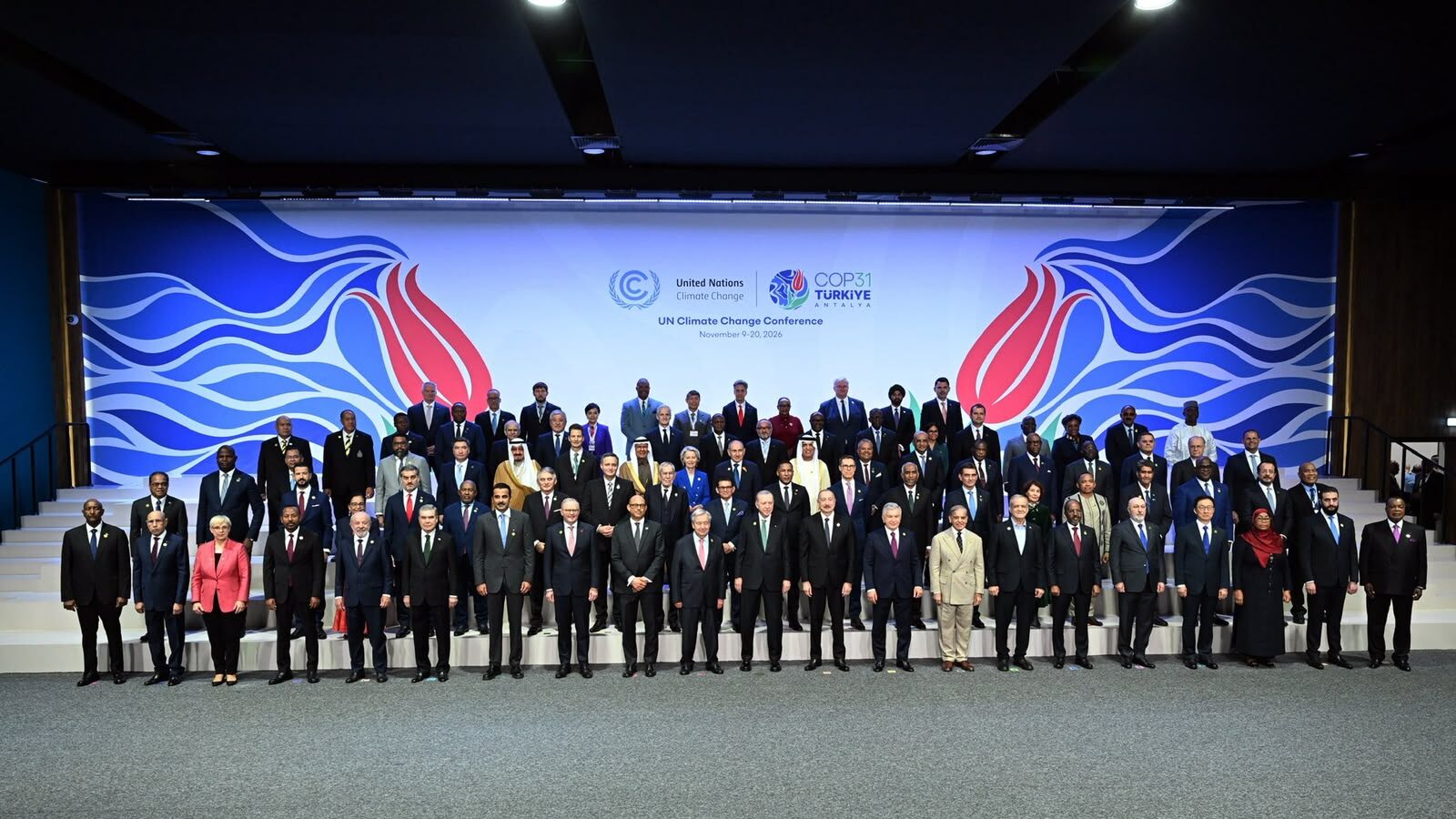
Antalya’s Day 3 exposed a climate-policy paradox: leaders spoke of implementation, while negotiating rooms still revealed the distance between ambition and delivery. The Antalya Leaders’ Summit on 11 November spotlighted clean electrification, resilience, finance and international cooperation as political signals. Their credibility will depend on negotiated decisions, public resources and benefits reaching communities.
UN Climate Change Executive Secretary Simon Stiell warned that fossil-fuel dependency carries unforgiving economic and political costs, linking climate disasters and energy-market volatility to inflation, public budgets and household bills. He urged faster implementation through electrification, tripled adaptation finance and improved access to finance, while insisting that climate benefits be shared fairly. Africa’s test is whether climate action delivers reliable electricity, safer livelihoods, resilient food systems and protection from loss, not merely targets and announcements.
Leadership remained uneven. Electrification and energy security featured prominently, yet many leaders avoided explicitly linking electrification to a transition away from fossil fuels. The proposed “35 by 35” ambition to raise electricity’s share of final energy consumption to 35% by 2035 will only be climate-positive if powered by clean renewables and accompanied by universal, affordable access. Without safeguards, electrification could expand demand while locking countries into fossil infrastructure. Developing economies account for around 80% of growth in global electricity demand, but Africa receives only about 2% of energy-transition investment: a profound imbalance COP31 must confront.
On just transition, Parties broadly recognised the value of the Just Transition Work Programme (JTWP) as a platform for dialogue and shared learning, agreeing it should complement the emerging Just Transition Mechanism. The unresolved question is whether an improved Work Programme should continue for two to three years as the Mechanism becomes operational, or be integrated into it. Parties called for inclusive participation, transparent topic selection and timely outputs offering actionable solutions. For Africa, the mechanism must move beyond dialogue to funded cooperation, protecting workers, women, informal livelihoods and communities through social protection, skills, decent work and locally owned alternatives.
Adaptation remains a warning signal: developing countries continue to demand a credible roadmap to triple adaptation finance, but none had emerged by Day 3. Finance negotiations exposed divisions over public grant-based support, private finance, access barriers and replenishment of multilateral funds. These are not accounting debates; they determine whether adaptation plans become early-warning systems, resilient infrastructure, community restoration and support for farmers facing droughts and floods. Grants are essential so climate support does not deepen the debt of countries least responsible for the crisis.
Voluntary initiatives can mobilise capital, but cannot replace public obligations. The Tropical Forests Forever Facility reached approximately US$7.9 billion in pledges, US$2.1 billion below its US$10 billion year-end target. The Electrify Now Finance Coalition launched with US$94 million in catalytic finance, aiming to mobilise more than US$1.2 billion. These are useful signals, not substitutes for predictable public finance under Article 9.1, full Loss and Damage funding or direct, accessible resources for frontline communities.
GreenFaith Africa’s message is unequivocal: **implementation must be judged from the ground up.** COP31 must operationalise a rights-based Just Transition Mechanism; establish a funded adaptation-finance pathway; replenish Loss and Damage through grants and accessible community-facing delivery; and guarantee renewable-powered, affordable energy for all. Africa must also secure local industrial value-addition manufacturing, processing, skills and decent jobs, rather than export raw minerals and import technologies while communities absorb the costs.
Faith communities are not spectators. Through grassroots organising, women’s leadership in energy justice, community resilience and moral advocacy, they can hold governments and financiers accountable while advancing practical alternatives. At Day 3, COP31 has generated momentum, not yet justice.
Antalya becomes an Implementation COP only when commitments translate into grants, accessible finance, community ownership, dignified work and energy for every household, not another promise that leaves Africa waiting.