
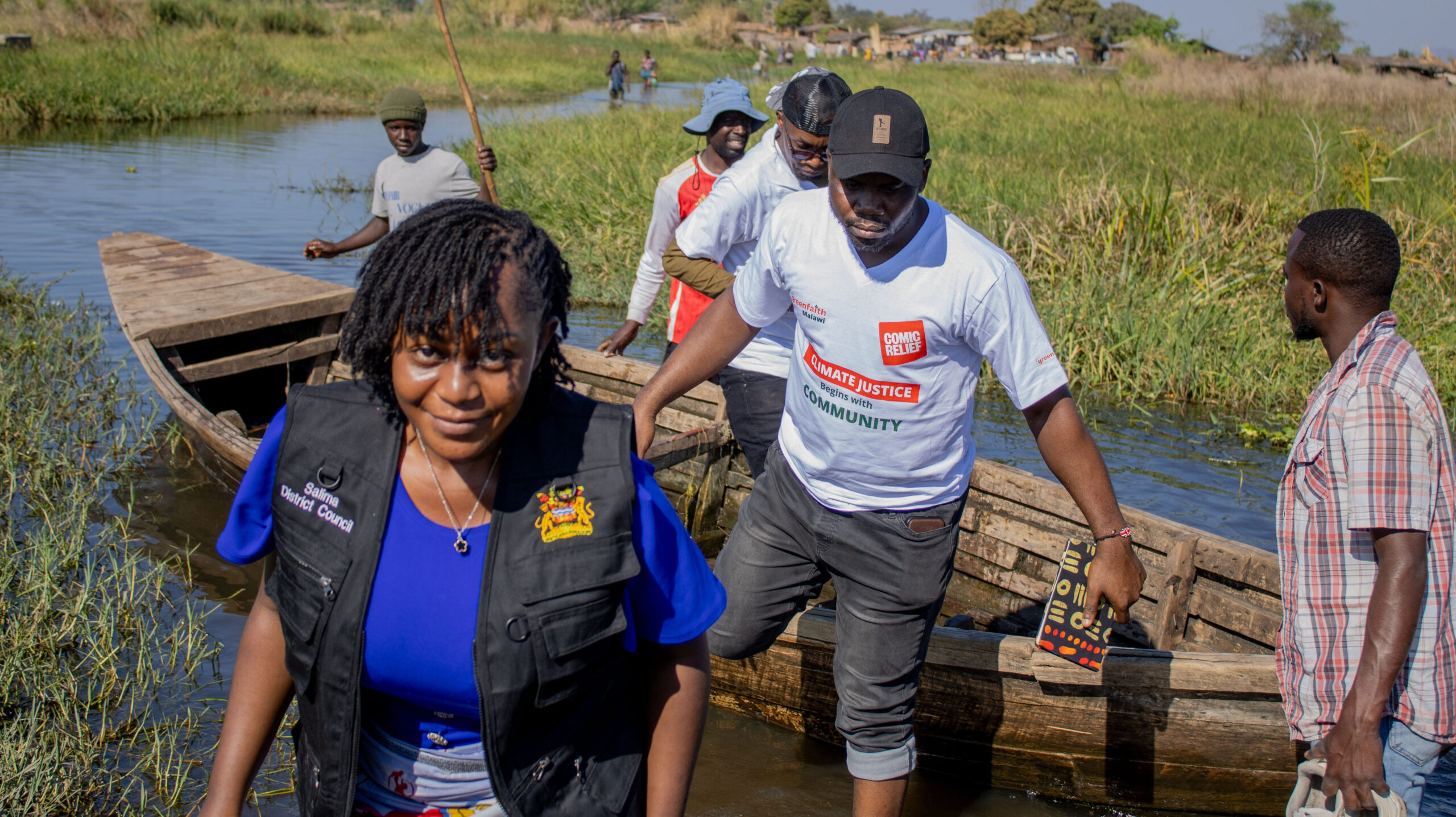
In our sector, we have a habit of speaking in the language of risk categories. There is inherent risk; the risk a community accepts, knowingly or not, simply by existing where it does: on a floodplain, on a lakeshore, in a place whose very fertility and beauty are inseparable from its exposure. And there is residual risk; the risk left over after we have done our part: after the project has been designed, the funds disbursed, the early-warning system installed, the resilience training delivered. Residual risk is the risk we allow ourselves to file away as “acceptable,” because we have, on paper, already acted.
However, the community in Group Village Headman Sani 1 in Salima District forces an uncomfortable question: does it matter, to the mother walking 23 Kilometers with a feverish child, whether the water that swallowed her house, garden and the road that was never built are classified as inherent or residual? Whether her exposure is a risk we inherited or a risk we left behind, the distinction is a technical comfort for those of us who develop frameworks, not a lived reality for those who bail water out of their homes at night. To the people of Sani 1, risk is not a category. It is the lake at the doorstep. It is the 40 Kilometers between a sick child and a doctor. It is the difference between a “good” rainy season and a “devastating” one
It was precisely this lived reality that took us to Lilongwe last week, where we launched an initiative built on a simple but radical idea: that the climate crisis is not only an environmental emergency but a crisis of justice, dignity, and care; and that the people best placed to respond are often those already woven into the fabric of communities – faith leaders, congregations, traditional authorities, community volunteers, and local institutions. Nonetheless, these people remain among the most underutilized and least recognized actors in climate adaptation and social protection.
They are often the first to respond when disaster strikes and the last to leave when recovery begins and post recovery or reconstruction end, yet they continue to operate with limited financial resources, inadequate technical capacity, and little integration into formal climate adaptation and social protection systems. As climate shocks become more frequent and more severe, expecting communities and their trusted local institutions to do more with less is neither just nor sustainable. Instead, they must be recognized as strategic partners, supported with predictable financing, strengthened capacities, and meaningful inclusion in the policies, programmes and systems designed to protect the very communities they already serve. Accordingly, together with our partners, we called the project, fittingly, the Circle of Care. Not only to coherently speak of the nexus between social protection and climate action, but also to leverage faith actors as strategic partners in reaching the furthest behind first.
Now back to Sani 1. Tucked in the rural part of Salima District, Sani 1 is a small fishing community of roughly 500 people (about 120 households) clinging to the edge of a lake that no longer respects its edges. Lake Malawi’s water levels have been swelling toward historic highs this year, and as it rises, it does not simply flood a village. It repossesses it. Compounds that once held homes, gardens, and burial grounds are now submerged. By the account of the people who still live there, what remains of dry, usable land for the entire community can now be measured in a matter of meters; an almost unbelievable fraction of what Sani 1 once called home.
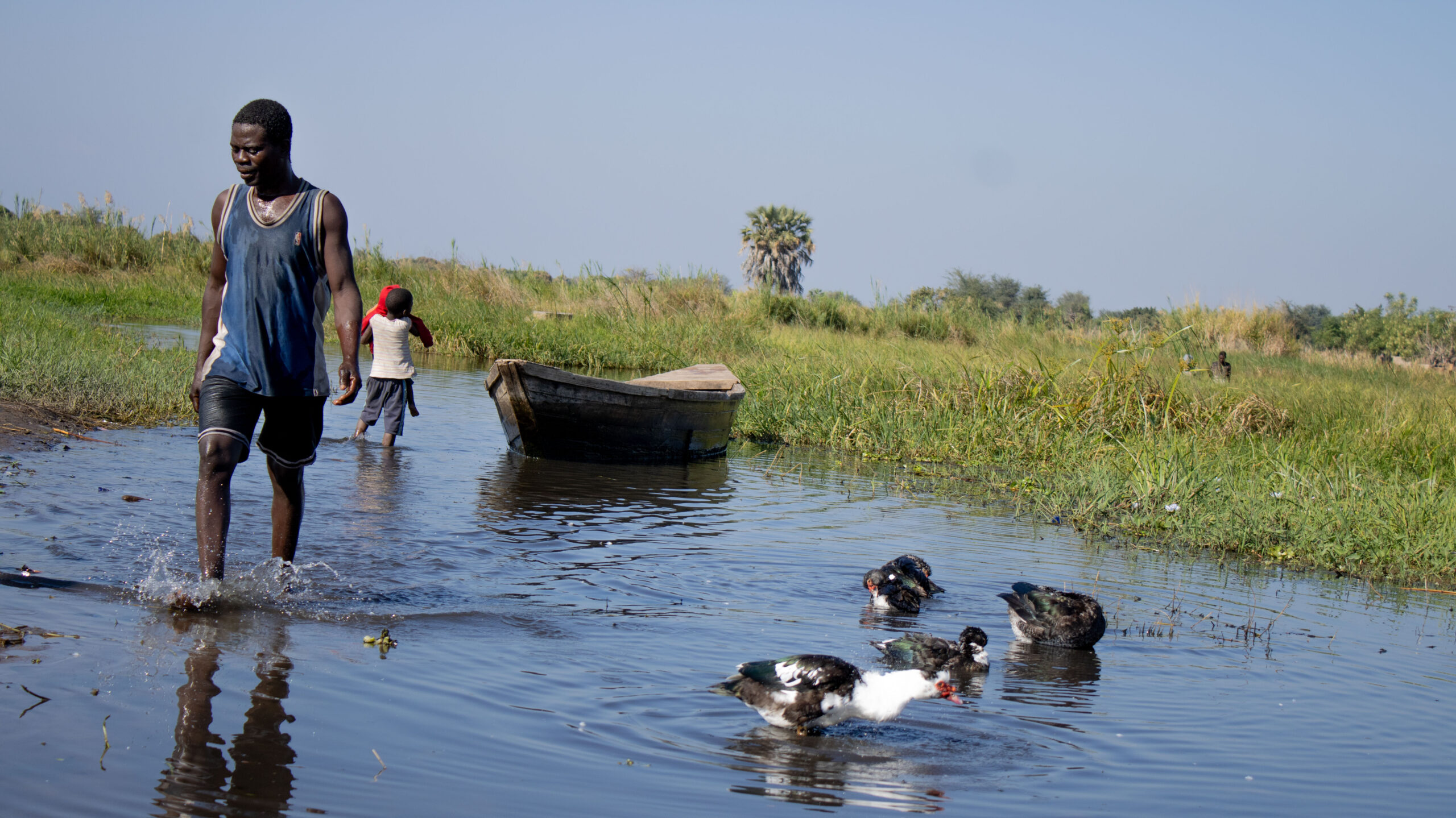
We moved through the village not by road, but by dhow. There is no meaningful road to Sani 1 to begin with; there is no electricity; there is no health facility. The nearest clinic is 23 Kilometers away. The nearest hospital capable of handling anything serious; a difficult birth, a snakebite, a child struggling to breathe; is 40 Kilometers from where the water now laps at people’s doorsteps. Imagine labor beginning at midnight in a household with no light, no road, and no boat engine strong enough to beat the dark to a clinic that is still hours away even in daylight. This is not a hypothetical for Sani 1. It is Tuesday.
This is precisely why we built the Circle of Care on the conviction that social protection and climate action cannot be separate conversations, arriving in separate ministries, funded by separate budget lines, years apart. A community does not experience “climate adaptation” on Monday and “social protection” on Friday. It experiences a single, continuous exposure to harm; and it needs a single, continuous, coordinated response. Faith leaders who bury the dead and dedicate the newborns in Sani 1 already understand this coherence instinctively; it is our institutions that have been slow to catch up.
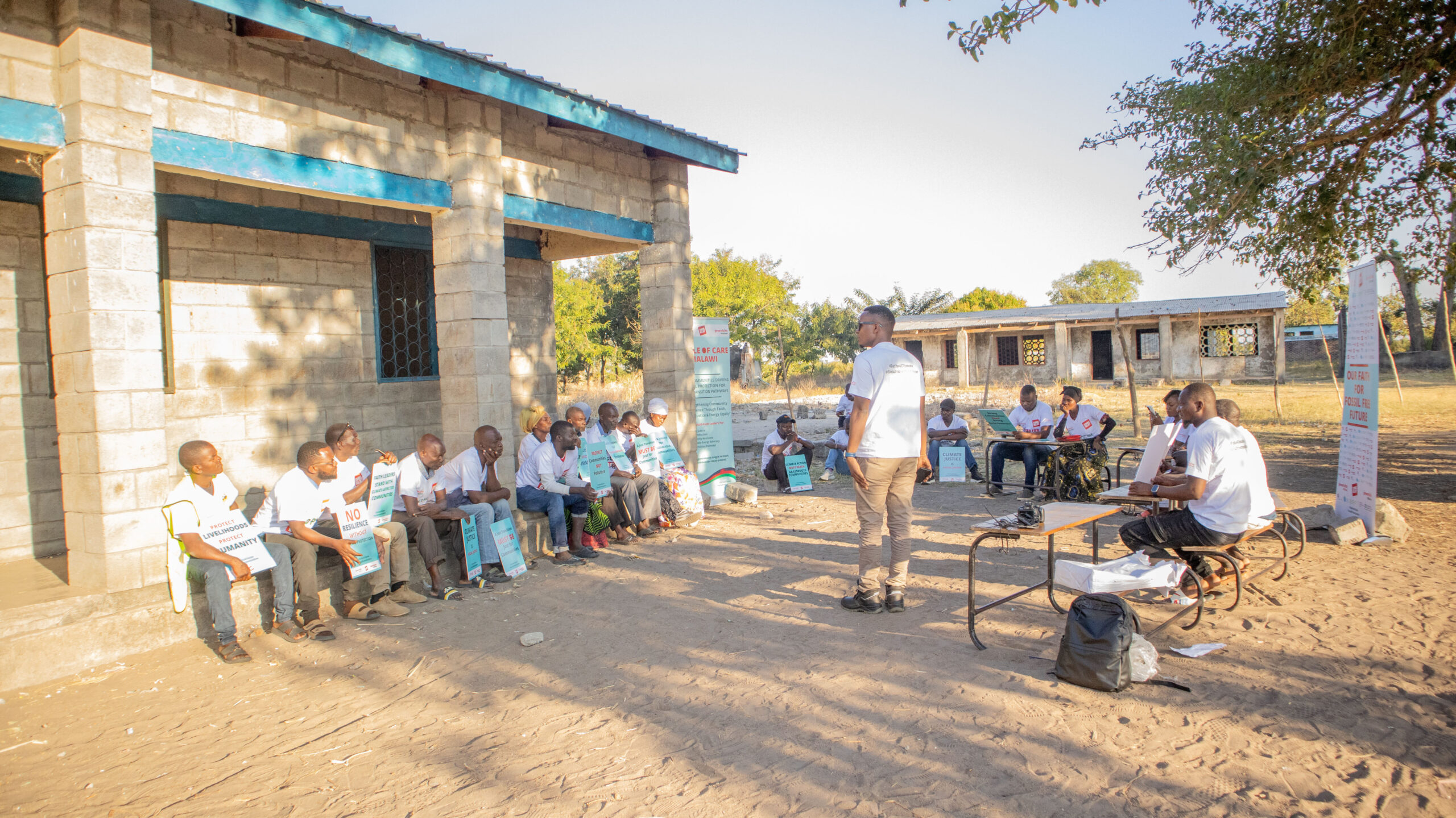
So let us be plain about what “we must act” means here. It means investing in early warning and planned, dignified relocation before the lake decides the timeline for us. It means health outreach and mobile clinics that go to Sani 1, rather than requiring Sani 1 to come to them across 23 Kilometers of water and mud. It means social protection transfers and livelihood support that reach fishing communities whose nets and canoes are being lost to rising water, not only farmers on dry land. It means faith communities, chiefs, district officials, and organizations like ours refusing to let “residual” become a polite word for “someone else’s problem, later.”
We came to Malawi to launch a project. We left having met the very communities that the project exists to serve; and having been reminded that no risk register, however carefully drafted, feels neutral to the people living inside it. Sani 1 is not a case study. It is 500+ people whose homes are disappearing while the rest of us debate categories. Residual or inherent, the risk is real, the lives are at stake, and the time to act was yesterday. The next best time is now; together, inside the Circle of Care, with Sani 1 at its center, not its edge.
GreenFaith Africa’s Circle of Care strengthens the role of faith actors as strategic partners in climate-responsive social protection in Malawi, Uganda and Ghana. To stand with communities like Sani 1, reach out to our team and/or share this story.
This article was done by: Ms. Meryne Warah, the Executive Director for GreenFaith Africa, Dr. Pius Oko, the Regional Head of Programmes for GreenFaith Africa, Mr. Kondwani Mubisa, Circle of Care Project Officer for Malawi, Mr. Brian Misiati, the Regional Communications and Digital Engagement Lead for GreenFaith Africa, Ms. Christine Mueni, GreenFaith Africa Project Officer for Kenya and Ms. Magdalene Hadhidha, GreenFaith Africa Circle of Care Project Assistant.