
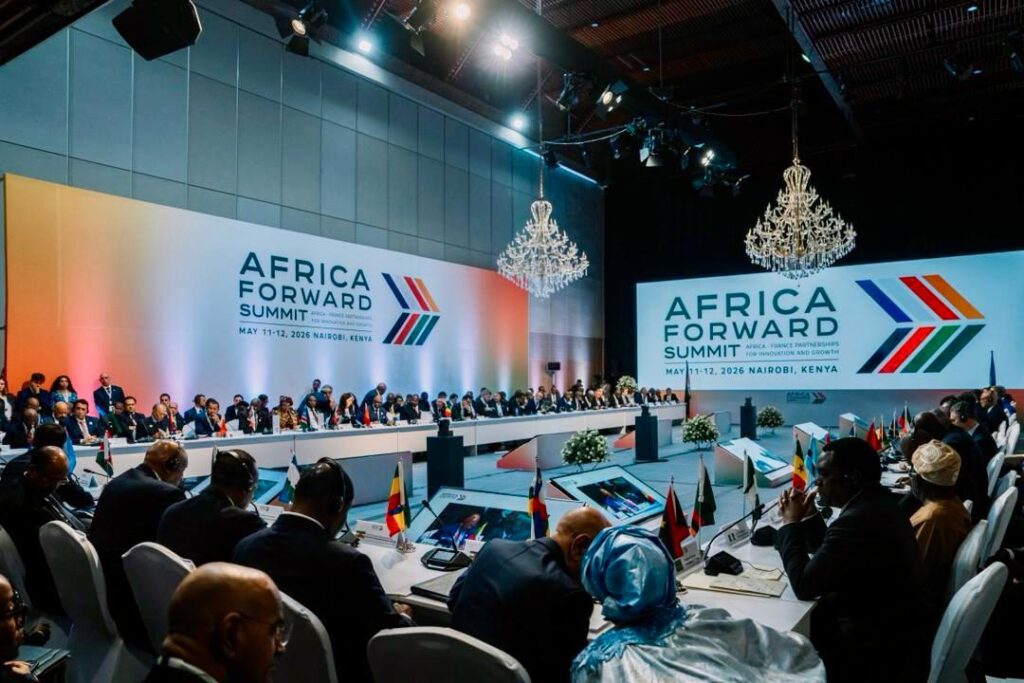
The Long Shadow of France-Africa Relations
To understand the significance of the Africa Forward 2026 Summit Declaration, one must first understand
the long and deeply contested history between France and Africa. For decades after formal
independence, relations between France and many African nations were shaped by what became known
as Françafrique; a political, economic, and military system through which France maintained significant
influence over its former colonies. Through military agreements, monetary arrangements such as the CFA
franc, preferential access to natural resources, and political alliances with post-independence elites,
France preserved structures of dependency that often undermined true African sovereignty.
While these relationships were frequently justified in the language of stability, cooperation, and
development, many African communities experienced them differently: as systems that enabled
extraction, weakened democratic accountability, and prioritized foreign strategic interests over local
wellbeing. Faith communities across Africa have long witnessed the consequences. In fact, todate,
communities living near oil fields, uranium mines, forests, and large-scale agricultural projects have too
often borne the ecological and social costs of development while wealth flowed outward. In countries
across West and Central Africa, people have questioned why resource-rich regions remain marked by
poverty, environmental degradation, and instability despite decades of international partnership.
In recent years, anti-French sentiment has grown across parts of the continent, particularly in the Sahel.
Military withdrawals from Mali, Burkina Faso, and Niger reflected not only geopolitical shifts, but also a
broader crisis of legitimacy surrounding France’s role in Africa. Many young Africans increasingly reject
paternalistic models of engagement and are calling instead for partnerships grounded in dignity, equality,
and self-determination.
Climate and Innovative Finance: The New Frontier of Influence
At the same time, the global climate crisis has intensified the urgency of redefining Africa-Europe
relations. Africa contributes the least to global greenhouse gas emissions, yet suffers disproportionately
from climate disasters, droughts, floods, food insecurity, and displacement. According to the
Intergovernmental Panel on Climate Change and the African Development Bank, climate-related shocks
are already costing African economies between 5 and 15 percent of GDP growth annually through floods,
droughts, desertification, crop failures, and infrastructure damage. The Horn of Africa has experienced
one of the worst droughts in four decades, leaving more than 20 million people food insecure, while
extreme flooding in countries such as Nigeria, South Sudan, and Kenya continues to displace
communities and destroy livelihoods. These realities expose a profound injustice: those least responsible
for the climate crisis are suffering its gravest consequences.
Meanwhile, industrialized nations, including France and broader Europe, continue to benefit from
economic systems historically built on colonial extraction and fossil fuel-driven growth. European
economies for instance, accumulated wealth through centuries of resource exploitation, carbon-intensive
industrialization, and unequal trade structures that externalized environmental costs onto the Global
South. This contradiction is increasingly evident in emerging climate policy instruments such as the
European Union’s Carbon Border Adjustment Mechanism (CBAM). While presented as a tool for reducing
global emissions and preventing carbon leakage, CBAM risks imposing new economic pressures on
African economies that remain structurally disadvantaged within global trade systems. African exporters
in sectors such as steel, cement, aluminum, and fertilizers may face additional compliance costs and
market barriers despite contributing minimally to historical global emissions.
For many African observers, this raises difficult questions about fairness and climate responsibility. There
is growing concern that climate policies designed in Europe could reproduce older patterns of economic
control by shifting the burden of transition onto countries that still struggle with energy poverty, industrial
underdevelopment, and constrained climate financing. Without equitable transition support, technology
transfer, and genuine climate reparations, mechanisms such as CBAM risk being perceived not as
instruments of justice, but as new forms of green protectionism.
Yet too often, declarations about “green growth,” “strategic partnership,” and “sustainable development”
are presented without confronting this deeper moral and historical reality. Increasingly, climate finance,
carbon markets, biodiversity credits, and so-called green investment initiatives risk becoming the newest
frontier through which influence over African land, resources, and policy is exercised. For GreenFaith
Africa, ecological justice requires historical honesty. Climate justice demands more than investment
language and diplomatic symbolism. It calls for reparative relationships rooted in accountability, solidarity,
and care for creation. It also requires centering frontline communities, Indigenous knowledge systems,
women, youth, and faith actors whose lives and livelihoods are directly shaped by ecological collapse.
This conversation is particularly urgent in the context of emerging fossil fuel infrastructure projects across
East Africa, including the East African Crude Oil Pipeline (EACOP). The proposed 1,443-kilometre heated
pipeline, stretching from Uganda’s oil fields to the Tanzanian coast, threatens sensitive ecosystems,
water sources, biodiversity corridors, and the livelihoods of thousands of local communities. Civil society
reports estimate that more than 100,000 people have been affected through land acquisition processes
linked to the project, while projected lifetime emissions from the oil development could exceed 379 million
tonnes of carbon dioxide. Critically, the project also exposes the contradictions within Europe’s climate
leadership narrative. EACOP is led by the French energy giant TotalEnergies, whose significant financial
and operational involvement has made France’s private sector central to one of the most controversial
fossil fuel expansion projects on the African continent. While European governments publicly champion
climate ambition and green transition frameworks, European corporate investments continue to support
long-term fossil fuel infrastructure in Africa.
For many faith and climate justice movements, this contradiction raises urgent ethical concerns. It is
difficult to reconcile declarations about sustainable development and climate responsibility with continued
investments in projects that risk locking African economies into carbon-intensive development pathways
for decades to come. The question confronting African communities is increasingly clear: whose energy
transition is being financed, and who ultimately bears the ecological and social costs? For communities of
faith, projects such as EACOP raise not only environmental concerns, but also moral questions about the
future being imagined for Africa vis-a-vis that being championed for countries like France. At a time when
the world urgently needs a just transition away from fossil fuels, Africa risks being locked into carbon-
intensive development pathways primarily designed to satisfy external energy interests. Against this
backdrop, the Africa Forward 2026 Summit Declaration arrives as both an opportunity and a test.
A GreenFaith Africa Reflection on the Africa Forward 2026 Summit Declaration
The Africa Forward 2026 Summit Declaration, adopted between African nations and the French Republic
under the banner of the “Africa-France Partnership for Growth and Innovation,” presents itself as a
visionary roadmap for peace, innovation, agriculture, and sustainable development. Its language is
carefully woven with the vocabulary of resilience, partnership, climate-smart agriculture, youth
empowerment, and green growth. On the surface, it reflects a shared ambition for prosperity and
continental transformation. Yet beneath these polished commitments lies a pattern Africa’s faith
communities have learned to recognize all too well: partnerships that speak the language of progress
while preserving unequal power, legitimizing extraction, and muting the moral urgency of ecological
justice.
From an Africa faith perspective, this declaration deserves not celebration alone, but prophetic scrutiny.
Faith traditions across Africa teach that the Earth is sacred, not a warehouse of resources for geopolitical
competition. Creation is not merely an economic asset to be managed for profit, but a divine trust to be
protected for present and future generations. Humanity was entrusted with stewardship, not domination.
Any development vision that fails to place justice for people and planet at its center risks becoming
another chapter in the long history of exploitation disguised as cooperation.
The declaration repeatedly invokes the language of “growth,” “strategic autonomy,” and “innovation,” yet
says remarkably little about accountability for historical ecological harm. France, like many industrial
powers, accumulated immense wealth through systems of colonial extraction that enriched Europe while
impoverishing African lands, labour, and ecosystems. A truly transformative partnership cannot be built
on selective memory. It must begin with truth-telling. Instead, the declaration often frames Africa as a
frontier of untapped opportunity; a continent awaiting investment, technological intervention, and
integration into global value chains. This rhetoric is not new. For decades, similar promises accompanied
development models that displaced communities, deepened debt, degraded ecosystems, and transferred
wealth outward while leaving many Africans economically vulnerable.
The declaration’s section on peace and security illustrates this contradiction with striking clarity. While it
correctly acknowledges the relationship between peace, security, and sustainable development, it
remains largely trapped within the logic of militarized stability. It speaks extensively of counter-terrorism,
strategic autonomy, and security architecture, yet inadequately confronts one of the greatest threats to
peace on the continent today: climate breakdown. Across the Sahel, the Horn of Africa, and the Great
Lakes region, climate disruption is intensifying hunger, displacement, water scarcity, resource conflicts,
and political instability. Droughts, floods, desertification, and ecosystem collapse are no longer peripheral
environmental concerns; they are direct drivers of insecurity and human suffering. Faith communities
witness this reality every day. Farmers pray over cracked soils after repeated failed rains. Families walk
longer distances in search of water. Fisherfolk watch rivers recede and ecosystems collapse. Young
people migrate from ancestral lands because the Earth that once sustained life can no longer do so.To
speak of peace without climate justice is to treat the symptoms while ignoring the wound.
The declaration’s agricultural commitments similarly reveal both promise and contradiction. Its references
to agroecology, agroforestry, and integrated soil health management are welcome signals. Yet these
ideas are embedded within a broader framework centered on agro-industrialization, fertilizer supply
chains, and scaling agricultural value chains primarily for international trade. Africa has heard this
language before. For decades, industrial agriculture models promoted by international financial
institutions and external actors have encouraged monocultures, dependence on imported inputs, land
concentration, and export-oriented production systems. The consequences have often included soil
degradation, biodiversity loss, indebted farmers, water contamination, and increased vulnerability for
smallholder communities. Faith communities understand that soil is not merely an economic input. Soil is
living inheritance. To poison the Earth for short-term productivity is to betray future generations.
Perhaps most troubling, however, is the declaration’s silence on fossil fuels and extractive industries. At a
moment when Africa is becoming the target of a renewed global scramble for oil, gas, critical minerals,
carbon markets, and offset schemes, any serious declaration on sustainable development should clearly
commit to a just energy transition centered on communities rather than corporations. Yet the document
avoids naming the economic systems driving the climate crisis. There is no meaningful rejection of new
fossil fuel dependency. There is no serious commitment to ending exploitative mining practices. There is
no acknowledgment of how carbon offset projects and conservation schemes can dispossess Indigenous
peoples and local communities in the name of climate action. Instead, the declaration risks reinforcing a
dangerous model in which Africa supplies the raw materials for Europe’s green transition while African
communities continue bearing the environmental, social, and spiritual costs. This is not climate justice.
Africa must not become a sacrifice zone for either fossil capitalism or so-called green capitalism.
GreenFaith Africa believes that a truly transformative Africa-Europe partnership would begin with moral
courage. It would acknowledge ecological debt and historical responsibility. It would prioritize reparative
climate finance instead of debt-inducing loans. It would protect forests and biodiversity without
criminalizing local communities. It would ensure that frontline voices; especially women, youth,
Indigenous peoples, farmers, and faith leaders; shape the decisions that affect their futures. Most
importantly, it would challenge the dangerous assumption that endless economic growth is the highest
measure of human progress. Our faith traditions teach that human flourishing cannot be separated from
the wellbeing of creation. Development that destroys rivers, uproots communities, pollutes ecosystems,
and accelerates climate chaos cannot meaningfully be called sustainable, regardless of how innovative its
language appears. Africa deserves partnerships grounded not merely in strategic interest, but in justice,
humility, accountability, and shared responsibility.
The crisis before us is not only technological or geopolitical. It is profoundly spiritual. We are living within
a global system that too often treats land as commodity, people as labour, and nature as expendable.
Against this logic, faith communities must proclaim a different moral vision; one rooted in dignity,
compassion, restraint, interdependence, and care for creation. The Africa Forward Declaration contains
seeds of possibility. Its references to resilience, agroecology, and inclusive growth suggest that another
path may still be imaginable. But seeds alone do not guarantee harvest.
Without binding commitments to climate justice, ecological protection, community sovereignty, and
structural economic transformation, declarations risk becoming ceremonial exercises that soothe political
consciences while ecosystems collapse and inequalities deepen. Africa’s future cannot be negotiated
exclusively in summit halls between political elites and foreign powers. It must also be shaped in farms,
forests, fishing communities, churches, mosques, temples, grassroots movements, and among ordinary
people already defending life against ecological destruction. As people of faith, we believe another future
is possible; not a future built on extraction disguised as partnership, but one grounded in justice, healing,
solidarity, and right relationship with creation. The question before Africa and its partners is not simply
whether growth will occur. The deeper question is this: Growth for whom? At what cost? And under
whose moral vision?