
In Sembabule District, the death of boda boda rider Sabiiti Dickson has raised urgent questions about road safety, corporate responsibility and the risks faced by communities living beyond the boundaries of the East African Crude Oil Pipeline project.
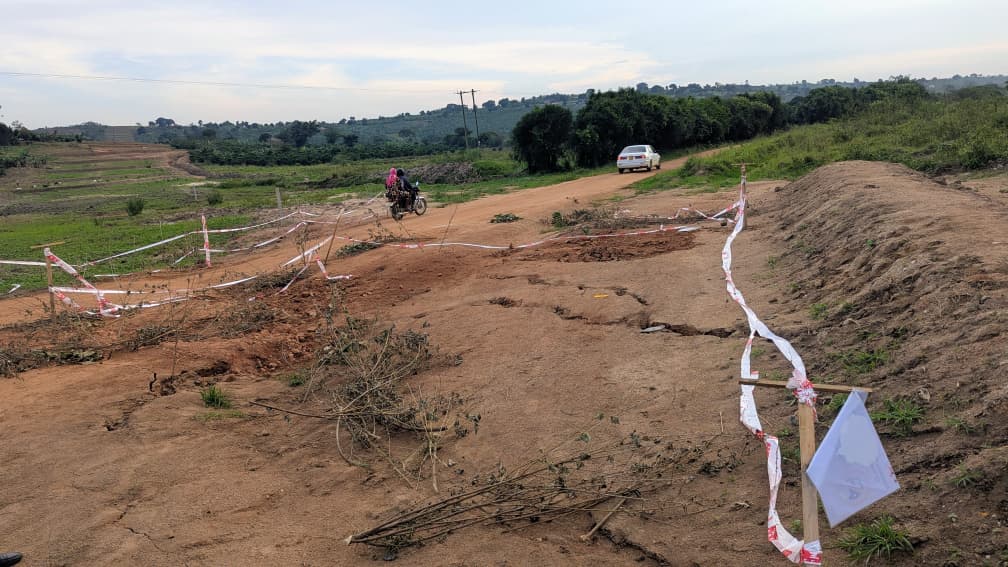
On Monday night, in Nambirizi B, Nsoga Parish, Mijwala Sub-county, Sembabule District, Sabiiti Dickson was riding his motorcycle when he fell into a ditch that had become a deadly hazard following heavy rainfall. Neighbouring fishermen reportedly heard his cries. He did not survive.
At 41, Dickson was born and raised in the very village where he lost his life. He was a single father of two young children, whose lives have now been irrevocably changed by his death. Following the incident, he was rushed to Masaka Regional Referral Hospital, more than 56 kilometres away from the scene.
What preceded his death, according to accounts from people familiar with the incident, was a chain of events that turned an apparently passable road into a dangerous trap. During the day, the road appeared intact. After the rain, the ground gave way, and the land subsequently collapsed, leaving a ditch that Dickson fell into with his motorcycle around midnight. Community concerns suggest that EACOP construction activities did not adequately account for the rainy season and the associated risks of ground instability. His death has left a family grieving and a community asking questions that extend far beyond one stretch of road: who is responsible for making infrastructure safe, and what happens when the people exposed to its risks are not the ones recognised as directly affected?
The East African Crude Oil Pipeline (EACOP), designed to transport crude oil from Uganda’s oil fields in the Albertine region to the Tanzanian coast, is a pipeline running across the landscape with its associated infrastructure interacting with roads, drainage systems, land and the daily movement of people. Where these interactions create hazards, the consequences can extend beyond households whose land has been acquired or whose property lies within the project’s immediate footprint.
In Sembabule, community accounts surrounding Dickson’s death point to precisely this concern. Residents say that although some people living directly along the pipeline route have received attention as project-affected persons, the wider community also uses the roads and spaces affected by associated works. Their exposure to danger does not necessarily end at a boundary drawn on a project map. “The pipeline affects people beyond the measurements of the pipeline,” is the concern expressed by those reflecting on the tragedy.
For residents who depend on motorcycles, trucks and other vehicles to reach homes, markets and workplaces, a damaged road or an inadequately secured excavation can become a matter of life and death. Rainfall can intensify these risks, particularly where the ground is unstable, or drainage is inadequate. Such hazards demand timely assessment, clear warnings and effective remedial action.
Following Dickson’s death, residents report that the dangerous ditch was not covered by the company in time, prompting local people to fill it with soil themselves to reduce the risk of another incident. These accounts raise serious questions about the response to the hazard and the adequacy of safety measures and the support offered to the bereaved family. One of the most troubling questions emerging from this tragedy concerns the definition of a project-affected community. Residents say that attention and compassion have largely focused on those living immediately alongside the pipeline, while others who share the same roads and depend on the same local infrastructure have also been exposed to risks. The distinction matters. The impacts of large infrastructure projects are not always confined to land acquisition boundaries. Roads used for construction and transport, altered drainage patterns, unstable ground and restricted access can affect people who may never have signed a compensation agreement or appeared on a resettlement register.
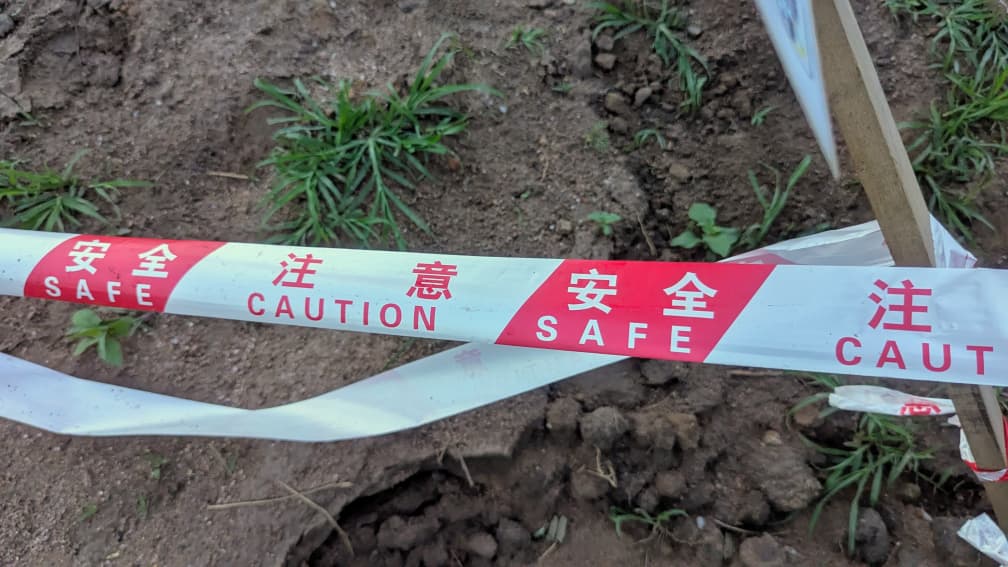
Residents in the area have also raised concerns about the closure of access roads. Such restrictions can disrupt mobility and livelihoods, while unsafe alternative routes may create additional dangers. These issues require systematic assessment rather than being treated as isolated inconveniences. The community deserves to know who was responsible for the hazard and what safeguards will prevent a similar incident.
The immediate priorities according to the community members should include an independent investigation, an assessment of the affected road and surrounding ground, the identification and securing of other dangerous excavations, and clear communication with residents about road closures and safety risks. The responsible authorities should also establish the appropriate channels for seeking redress.
Sabiiti was a person whose life extended beyond a pipeline corridor. He was a friend, a community member, a son of Nambirizi B, and a single father of two young children. His death has exposed the vulnerability of people whose everyday journeys intersect with oil infrastructure they may have little power to influence.
By Priscah Kajumba