
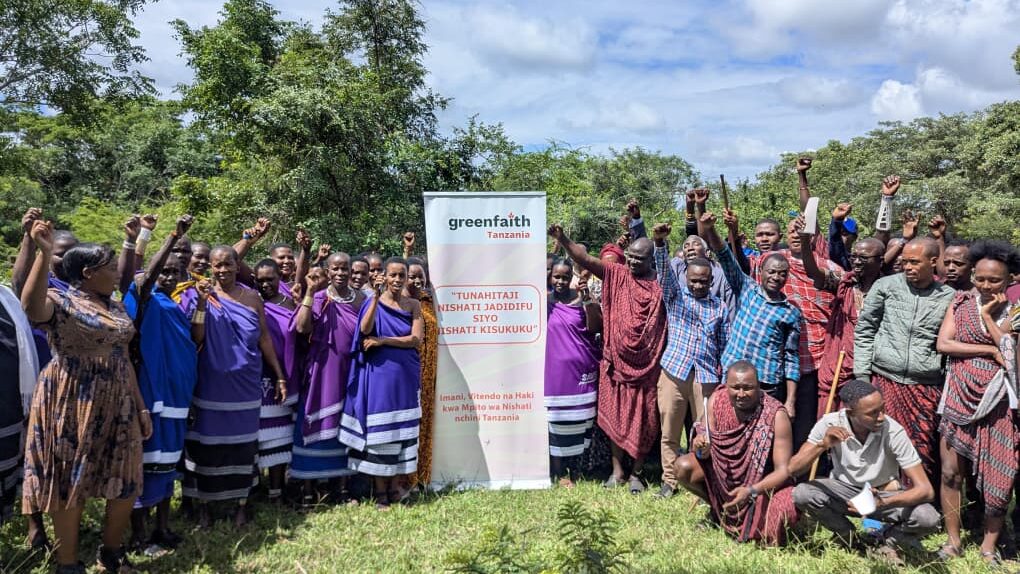
Grassroots dialogue on “Empowering Indigenous Faith Leadership and Grassroots Organizing for a Just Energy Transition.”
Across Africa, Indigenous communities continue to stand at the frontline of the climate crisis despite contributing the least to global environmental destruction. From prolonged droughts and disappearing water sources to loss of grazing land, biodiversity destruction, and displacement, Indigenous Peoples are increasingly bearing the devastating impacts of climate change and fossil fuel expansion projects. Yet, these same communities remain among the strongest protectors of ecosystems, forests, rivers, and traditional ecological knowledge systems that have sustained generations.
It is against this backdrop that GreenFaith Tanzania convened a powerful grassroots dialogue on “Empowering Indigenous Faith Leadership and Grassroots Organizing for a Just Energy Transition.” The engagement brought together Indigenous Peoples, faith leaders, women leaders, youth, and community representatives from across Tanzania to reflect on what a truly just and inclusive energy transition should look like for communities whose identities, spirituality, cultures, and livelihoods are deeply connected to the land.
The dialogue created a platform for Indigenous voices to share lived experiences, raise concerns, and collectively envision climate and energy solutions rooted in justice, dignity, inclusion, and environmental stewardship.
The convening also directly connects to GreenFaith Africa’s ongoing STOP EACOP campaign, which seeks to challenge destructive fossil fuel expansion projects such as the East African Crude Oil Pipeline (EACOP) and advocate for renewable, community-centered, and people-first energy systems across East Africa.
Indigenous Communities at the Frontlines of Climate Impacts
Participants at the dialogue emphasized that Indigenous communities in Tanzania are already experiencing severe climate-related impacts that threaten their way of life. Representatives from Maasai, Akie, Taturu, and other Indigenous communities spoke passionately about increasing droughts, shrinking grazing lands, unpredictable rainfall patterns, food insecurity, and environmental degradation.
For many Indigenous communities, climate change is not an abstract global discussion. It is a lived daily reality.
Women leaders highlighted the disproportionate burden borne by Indigenous women and girls, who often travel longer distances in search of water and firewood as natural resources become scarce. Communities also raised concerns over displacement, land grabbing, and exclusion from national policy-making spaces despite being custodians of vital ecosystems.
Faith leaders and community representatives including Rev. Isaya Mkopi, Eliza Kiondo, Zakaria Sanwel, and Recho Mika shared reflections on environmental stewardship, cultural preservation, and the urgent need for Indigenous inclusion in climate and energy governance.
Speaking during the engagement, Baraka Lenga emphasized the importance of ensuring Indigenous communities are central to climate conversations and energy transition processes.
“We cannot talk about a just energy transition without ensuring Indigenous Peoples’ voices are heard.”
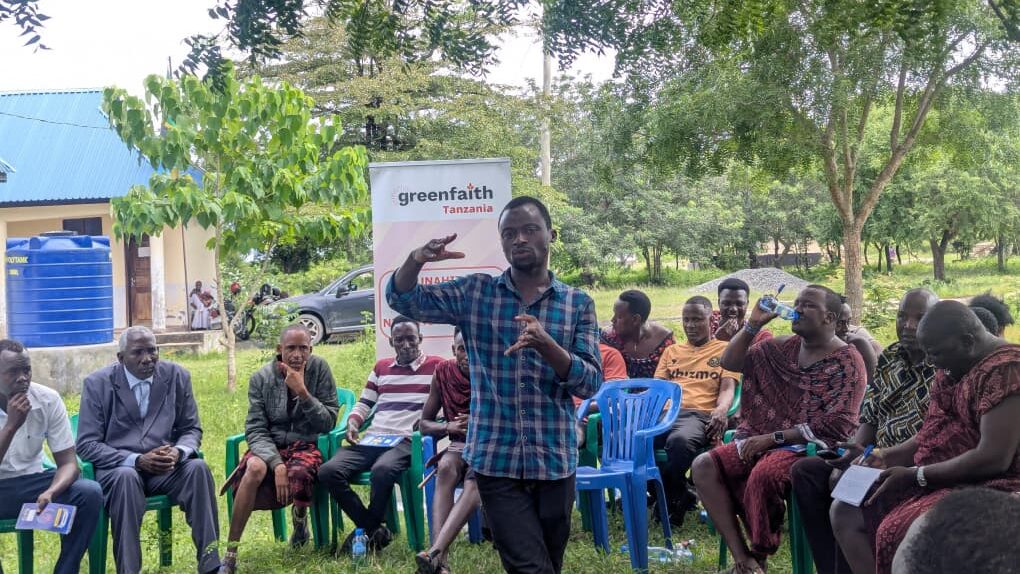
Baraka Lenga,National Coordinator GreenFaith Tanzania leading the discusions
The statement resonated strongly throughout the discussions as participants reflected on how climate and development decisions are often made without meaningful consultation with the very communities most affected.
Faith and Indigenous Knowledge as Pillars of Climate Justice
The dialogue highlighted the important role that faith and traditional ecological knowledge play in environmental protection and climate resilience.
For generations, Indigenous communities have safeguarded forests, water sources, grazing lands, and biodiversity through deeply rooted cultural and spiritual practices. Participants noted that long before modern environmental policies emerged, Indigenous Peoples already had systems of conservation and coexistence with nature.
Zakaria Sanwel reflected on the wisdom embedded in Indigenous knowledge systems and their relevance in addressing today’s climate crisis.
“Long before modern environmental policies existed, our communities already had systems to protect forests, water sources, and land.”
Faith leaders also emphasized that environmental protection is not only a scientific or political issue but also a moral and spiritual responsibility. Communities of faith have a crucial role to play in mobilizing people, defending vulnerable populations, and advocating for policies that protect both people and the planet.
The dialogue reaffirmed that faith-rooted climate action can help bridge grassroots realities with national and international climate advocacy while centering compassion, justice, and human dignity.
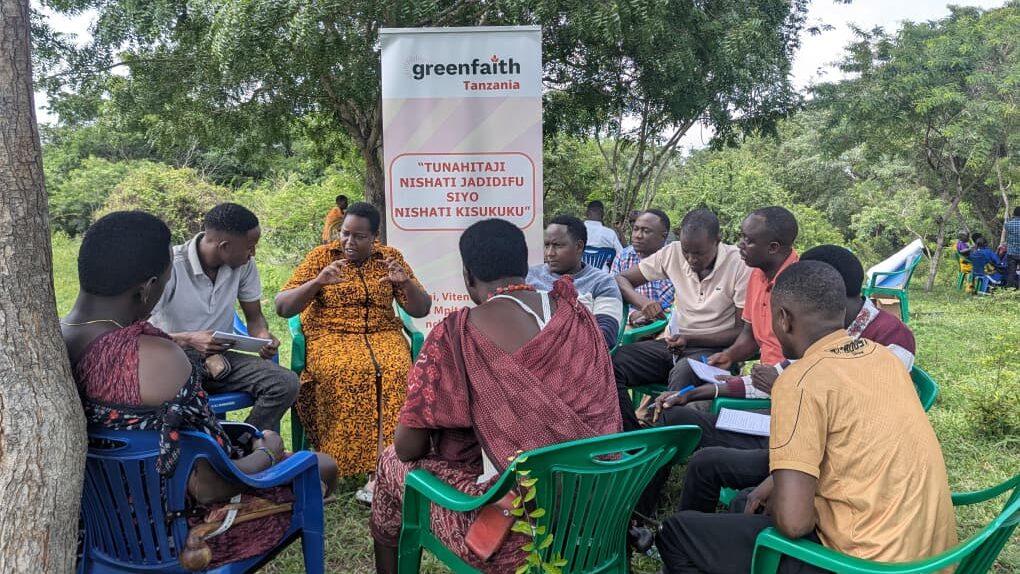
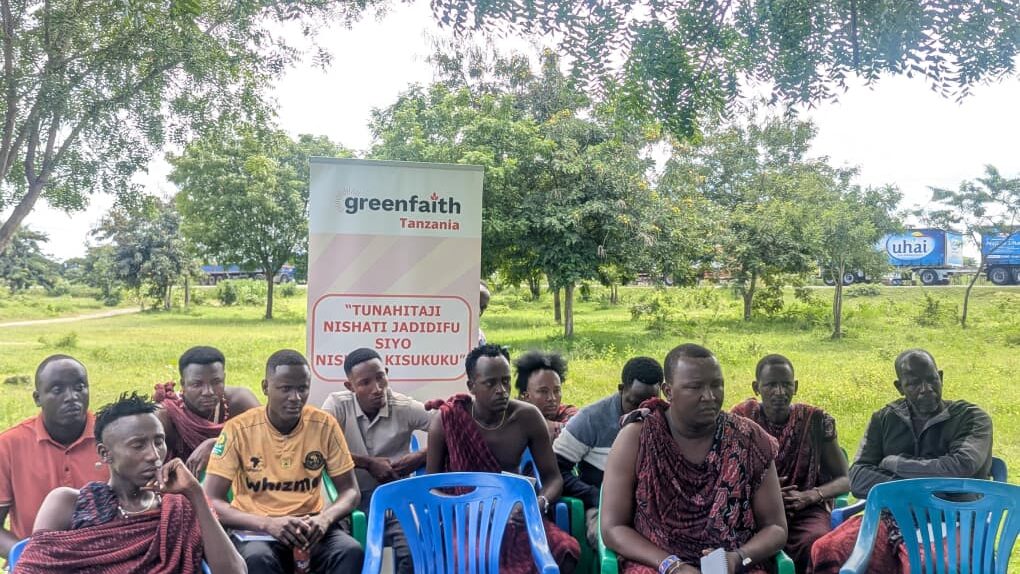
Community Members participate during the engagement
Connecting the Dialogue to the STOP EACOP Campaign
The engagement comes at a critical moment as communities across East Africa continue to raise concerns over the East African Crude Oil Pipeline (EACOP), one of the world’s most controversial fossil fuel projects.
The proposed pipeline, stretching from Uganda to Tanzania, threatens ecosystems, water sources, biodiversity, livelihoods, and the rights of local communities along its route. Civil society groups, faith leaders, environmental defenders, and Indigenous communities have repeatedly warned that fossil fuel expansion projects such as EACOP deepen climate injustice while exposing vulnerable communities to displacement, environmental degradation, and economic uncertainty.
For Indigenous communities in Tanzania, the concerns are deeply personal.
Many participants expressed fears over the long-term impacts of fossil fuel infrastructure on land rights, grazing systems, cultural heritage, and environmental sustainability. Communities highlighted the contradiction between expanding fossil fuel projects and the urgent need for climate action and renewable energy investments.
GreenFaith Africa’s STOP EACOP campaign continues to advocate for a transition away from fossil fuels toward renewable and community-centered energy systems that uphold human rights, protect ecosystems, and prioritize affected communities.
The grassroots dialogue reinforced the message that a truly just energy transition cannot be built on projects that endanger communities, increase emissions, and undermine local ecosystems. Instead, climate solutions must invest in renewable energy access, community resilience, Indigenous leadership, and sustainable livelihoods.
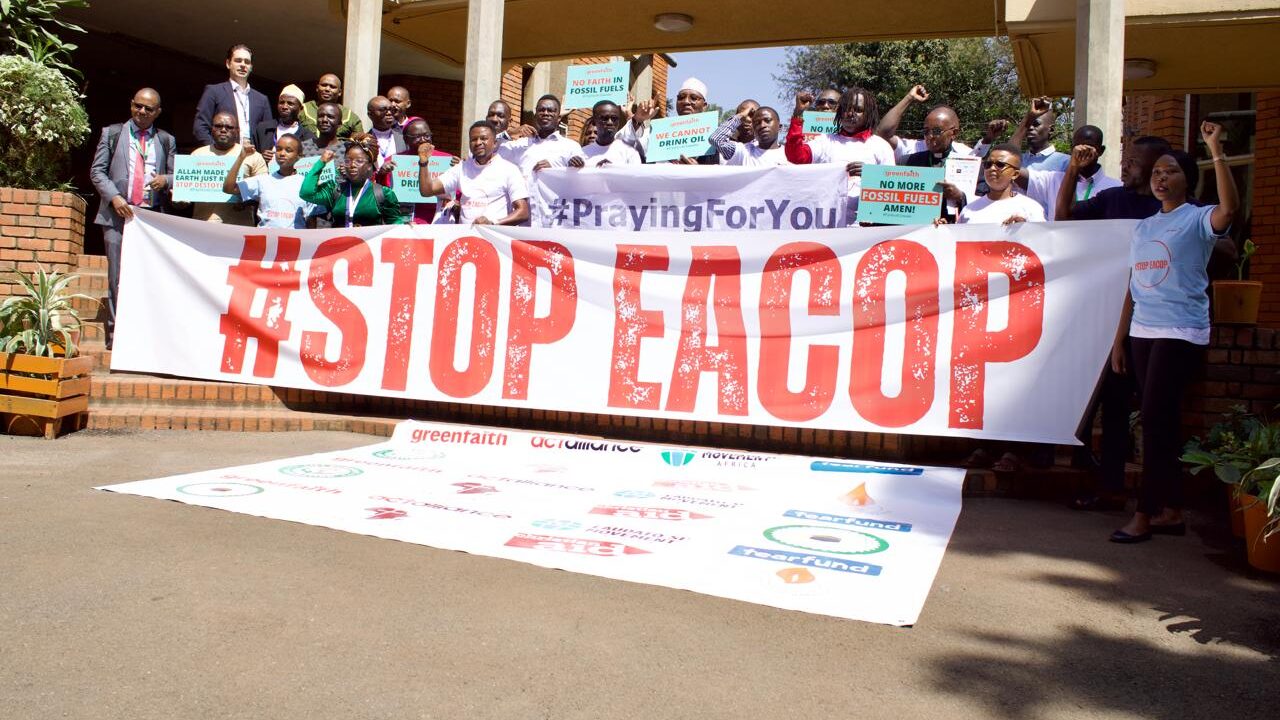
GreenFaith Africa Circle during a StopEACOP Campaign
Women at the Heart of Climate Resilience
A recurring theme throughout the engagement was the role of Indigenous women in climate resilience and environmental stewardship.
Women participants spoke openly about the daily challenges caused by environmental degradation and climate change, including water scarcity, food insecurity, and the increasing burden of unpaid care work. Despite being among the most affected, women are still underrepresented in many climate and energy decision-making processes.
Eliza Kiondo emphasized the urgent need for inclusive policies that fully recognize women’s leadership and lived experiences.
“Climate change is making life harder for Indigenous women. We need policies that fully include women in decisions about clean energy and community development.”
The discussions highlighted the importance of gender-responsive climate policies that not only acknowledge women’s vulnerabilities but also support their leadership, innovation, and participation in shaping sustainable solutions.
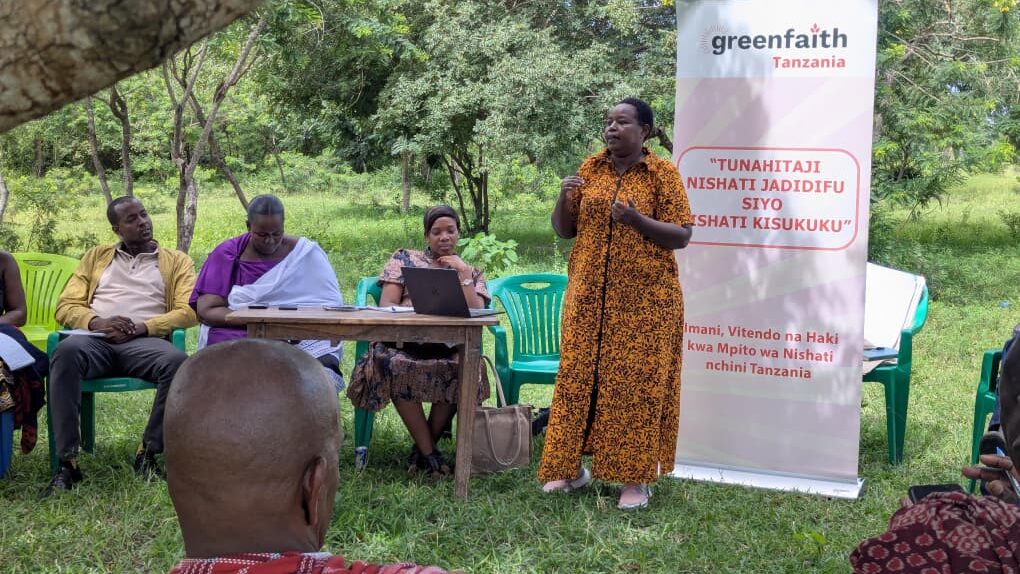
Despite being among the most affected, women are still underrepresented in many climate and energy decision-making processes.
Building a People-Centered Just Energy Transition
Throughout the dialogue, participants consistently stressed that a just energy transition must go beyond replacing fossil fuels with renewable energy technologies. It must address historical injustices, protect human rights, and ensure that no community is left behind.
Key recommendations emerging from the dialogue included:
- Ensuring meaningful participation of Indigenous communities in climate and energy policy processes.
- Protecting Indigenous land rights and cultural heritage.
- Recognizing and integrating traditional ecological knowledge into national climate strategies.
- Investing in renewable energy systems that are community-owned, accessible, and equitable.
- Strengthening grassroots organizing and faith-led climate advocacy.
- Promoting women and youth leadership in climate action spaces.
Participants also emphasized the importance of accountability and transparency in development projects affecting Indigenous territories and ecosystems.
A Collective Call for Climate Justice
The grassroots dialogue in Tanzania reaffirmed a powerful truth: Indigenous communities are not passive victims of climate change, they are leaders, protectors, and solution builders.
As Africa navigates the urgent transition away from fossil fuels, Indigenous voices, faith leadership, and grassroots movements must remain central to shaping sustainable and equitable futures.
GreenFaith Tanzania’s convening served as both a space for reflection and a call to action, a reminder that climate justice cannot be achieved without protecting Indigenous rights, amplifying community voices, and confronting harmful fossil fuel expansion projects like EACOP.
The path toward a Just Energy Transition must be rooted in justice, inclusion, dignity, and care for creation.
Only then can Africa build an energy future that truly serves both people and the planet.
The path toward a Just Energy Transition must be rooted in justice, inclusion, dignity, and care for creation.