
On May 7, 2026, GreenFaith Nigeria convened a landmark Multi-faith, Multisectoral Forum on Nigeria’s Just Energy Transition and Social Protection in Abuja under the theme “Faith, Justice and Power: Advancing an Inclusive Just Energy Transition in Nigeria.” Organized in partnership with The Kukah Centre, EcoSteward and Humanitarian Foundation (EHF), and supported by the European Climate Foundation and Comic Relief, the forum brought together religious leaders, policymakers, development partners, energy experts, civil society actors, media professionals, and community advocates across Nigeria.
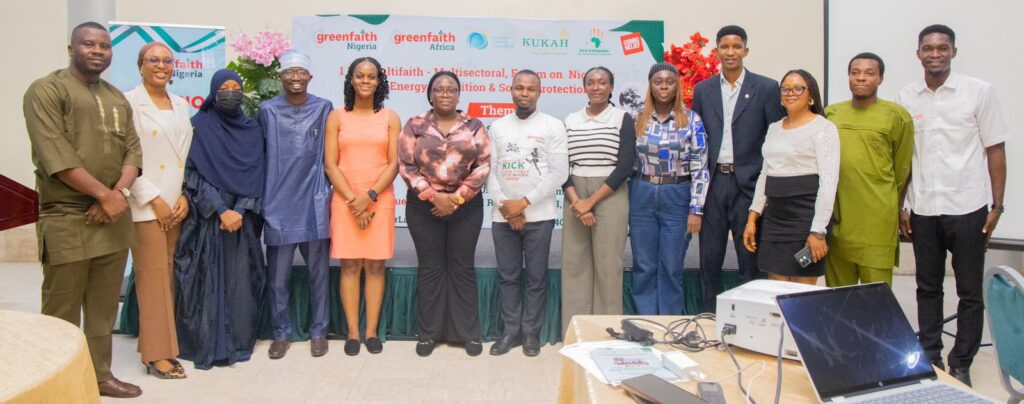
At a time when Nigeria stands at a defining crossroads in its energy future, the gathering was more than a dialogue. It was a collective moral call for justice, inclusion, and accountability in the country’s transition toward renewable energy.
Nigeria’s energy crisis remains one of the most pressing barriers to sustainable development. Despite attracting over $750 million in power sector investments in the last decade, millions of Nigerians continue to experience unreliable electricity or no access at all. Rapid population growth and rising energy demands continue to outpace supply, leaving communities, schools, hospitals, and small businesses in energy poverty.
Yet beyond the statistics lies a deeper reality: the communities most affected by energy inequality and climate impacts are often excluded from the conversations shaping the solutions.
This forum challenged that exclusion.
GreenFaith Nigeria emphasized that a truly just energy transition cannot be measured only by megawatts or infrastructure expansion. It must also be measured by dignity, equity, livelihood protection, environmental justice, and community participation. The transition to clean energy must not reproduce the same inequalities that have historically marginalized vulnerable communities, particularly women, youth, Indigenous peoples, and host communities in fossil fuel extraction regions.
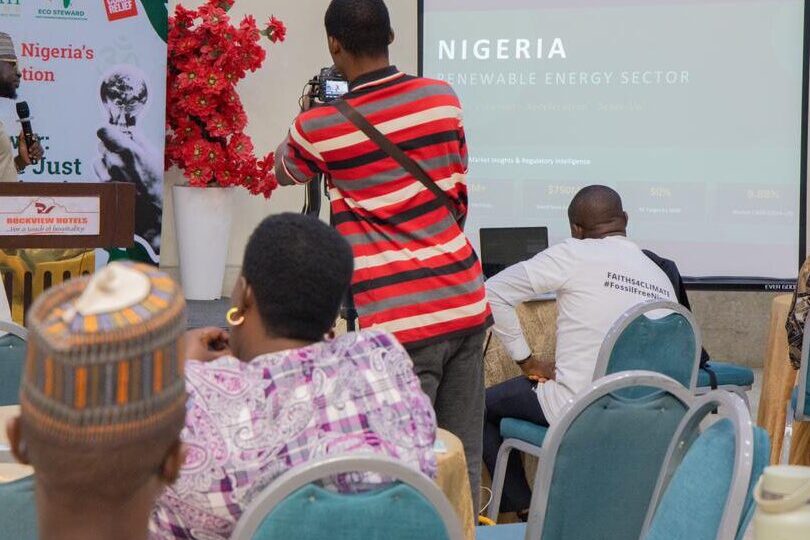
A major highlight of the forum was the recognition of faith communities as critical stakeholders in climate and energy governance. In many African societies, faith leaders are among the most trusted voices within communities. Their institutions reach millions of people daily and play powerful roles in shaping public values, mobilizing collective action, and influencing behavior. Yet, faith-based actors are still largely absent from national energy decision-making spaces.
The forum therefore called for the institutionalization of faith-based participation in national and sub-national energy transition processes. Participants stressed that climate justice is not only a technical or economic issue, but also a moral and ethical responsibility.
Discussions throughout the day explored practical pathways for achieving an inclusive transition. Stakeholders examined opportunities in decentralized renewable energy systems such as mini-grids, hydropower, solar energy, and green hydrogen, while also highlighting the importance of local manufacturing, energy sovereignty, grid modernization, concessional financing, and workforce development.
Equally important were conversations around women’s leadership in the energy sector. The forum reaffirmed the urgent need to expand opportunities for women engineers, entrepreneurs, and innovators to access financing, leadership positions, and decision-making roles within Nigeria’s clean energy future.
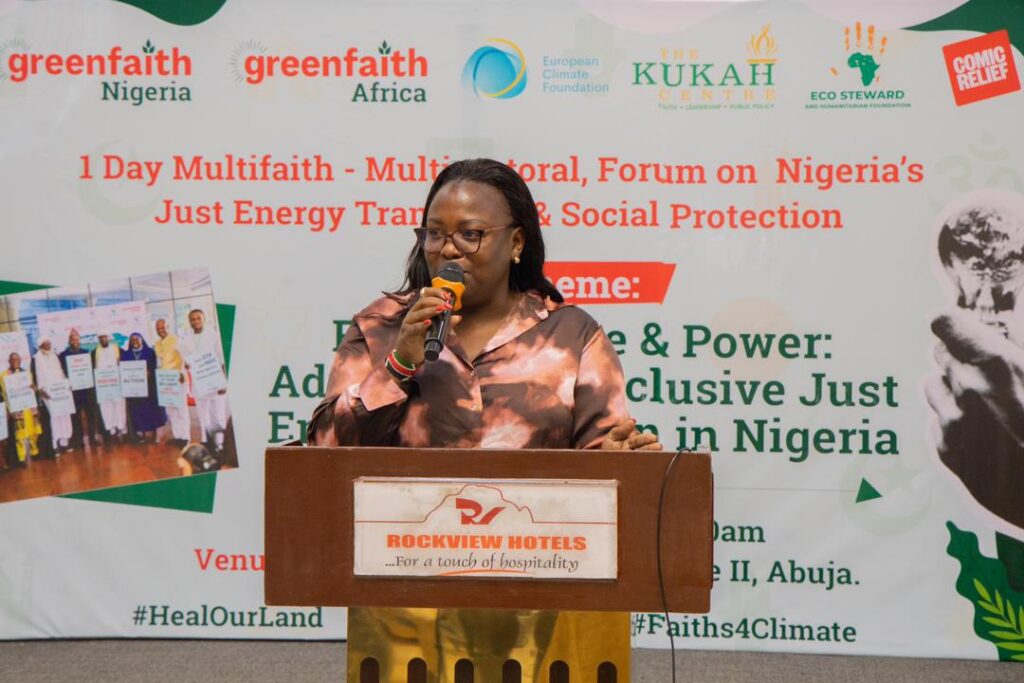
The realities facing host communities in the Niger Delta also remained central to discussions. Participants reflected on the devastating environmental and socio-economic consequences of fossil fuel extraction, polluted water bodies, loss of livelihoods, declining food systems, health challenges, and worsening poverty. These realities reinforced the demand for climate justice, environmental accountability, and an immediate shift away from new fossil fuel projects toward renewable alternatives.
At the conclusion of the forum, stakeholders adopted key resolutions and recommendations, including:
- Institutionalizing faith-based participation in energy governance;
- Accelerating decentralized renewable energy infrastructure;
- Prioritizing technocratic leadership in the energy sector;
- Strengthening local manufacturing and renewable energy value chains;
- Advancing women’s empowerment in energy systems;
- Protecting host communities from environmental degradation;
- Building local cooperation structures for community-led transition planning; and
- Expanding public education and advocacy on Nigeria’s Energy Transition Plan.
The forum also urged the Federal Government to halt new fossil fuel expansion projects and instead invest in renewable energy policies, incentives, and social protection mechanisms that prioritize people over profit.
As Nigeria advances toward its commitments under the Paris Agreement, the Climate Change Act 2021, and its Energy Transition Plan, GreenFaith Nigeria believes the path forward must be rooted in justice, transparency, and shared responsibility.
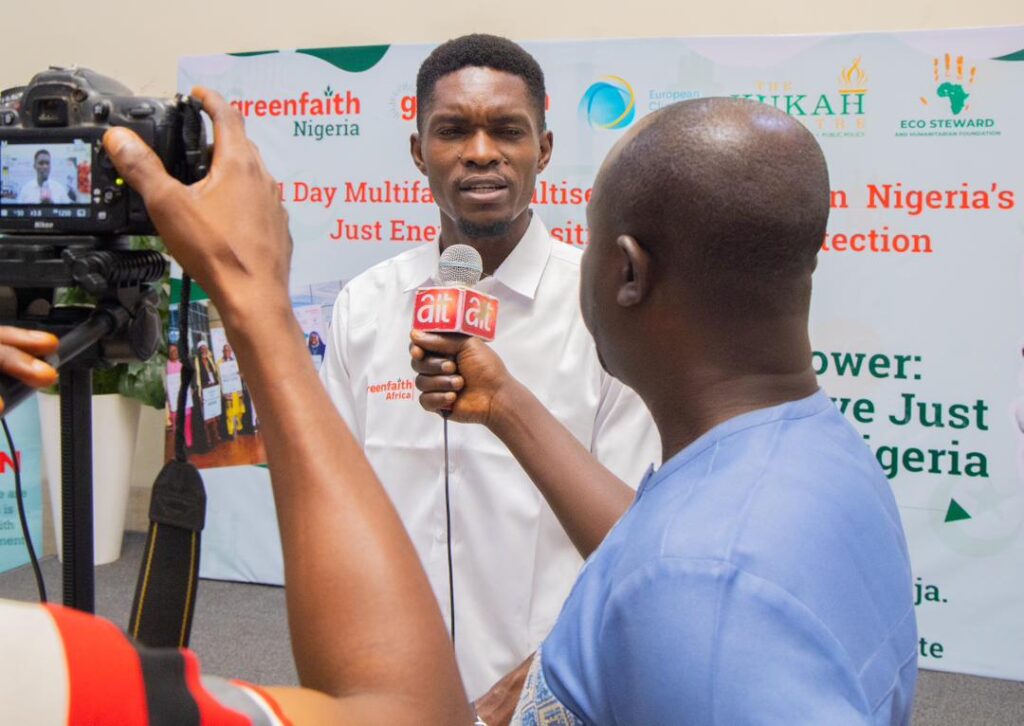
A just transition is not simply about changing energy sources. It is about transforming systems of exclusion into systems of care. It is about ensuring that frontline communities are not sacrificed in the pursuit of development. And it is about recognizing that faith, when combined with collective action, can become a powerful force for climate justice and social transformation.
The transition Nigeria needs must not happen for communities, but with them.