
Day 8 | Antalya, Türkiye
At COP31 in Antalya, the climate debate is no longer only about what governments promise to do. It is about who gets the money to act, whose lives are protected, and who gets to shape the story people hear about the climate crisis. Day 8 exposed a difficult truth: while the language of a just transition is gaining ground, the practical arrangements and finance needed to deliver it remain contested.
On the Just Transition Work Programme, parties showed growing agreement that the proposed Just Transition Mechanism must move beyond discussion and support implementation. The African Group, least developed countries and small island states called for an operational mechanism, backed by international cooperation, technology transfer, capacity-building and grant-based or concessional finance. Yet governments still disagree over its governance, structure and mandate. Some want a policy body linked to a practical implementation arm; others favour a more limited or phased arrangement. For workers, farmers, women, Indigenous Peoples and communities facing energy and economic change, the test is simple: will this mechanism help deliver decent work, social protection, affordable clean energy and resources on the ground or become another meeting place without means to act?.
Adaptation finance remains another fault line. Developing countries again called for adaptation finance to be tripled, with a proposed benchmark of US$120 billion emerging in discussions. But parties have not agreed on the baseline, method or tracking system. The African Group and other developing-country coalitions want a clear pathway and predictable support; meanwhile, the Climate Finance Work Programme remains divided over whether it should focus on developed countries’ obligations under Article 9.1 or the wider scope of climate finance. In the Adaptation Fund discussions, developing countries also defended predictable, multi-year contributions and easier access. The distinction matters: communities cannot build flood protection, secure water, restore farms or prepare for heat with finance that is uncertain, inaccessible or arrives after disaster.
Loss and Damage must be judged by the same standard. Day 8 did not produce a publicly reported breakthrough on direct funding for affected communities. The wider question of resource mobilisation and access remains part of the unfinished finance challenge. Climate finance must not stop at announcements or institutions: it must reach local governments, community organisations and frontline people in forms they can use, with grants prioritised so that countries already carrying climate-related debt are not pushed further into crisis.
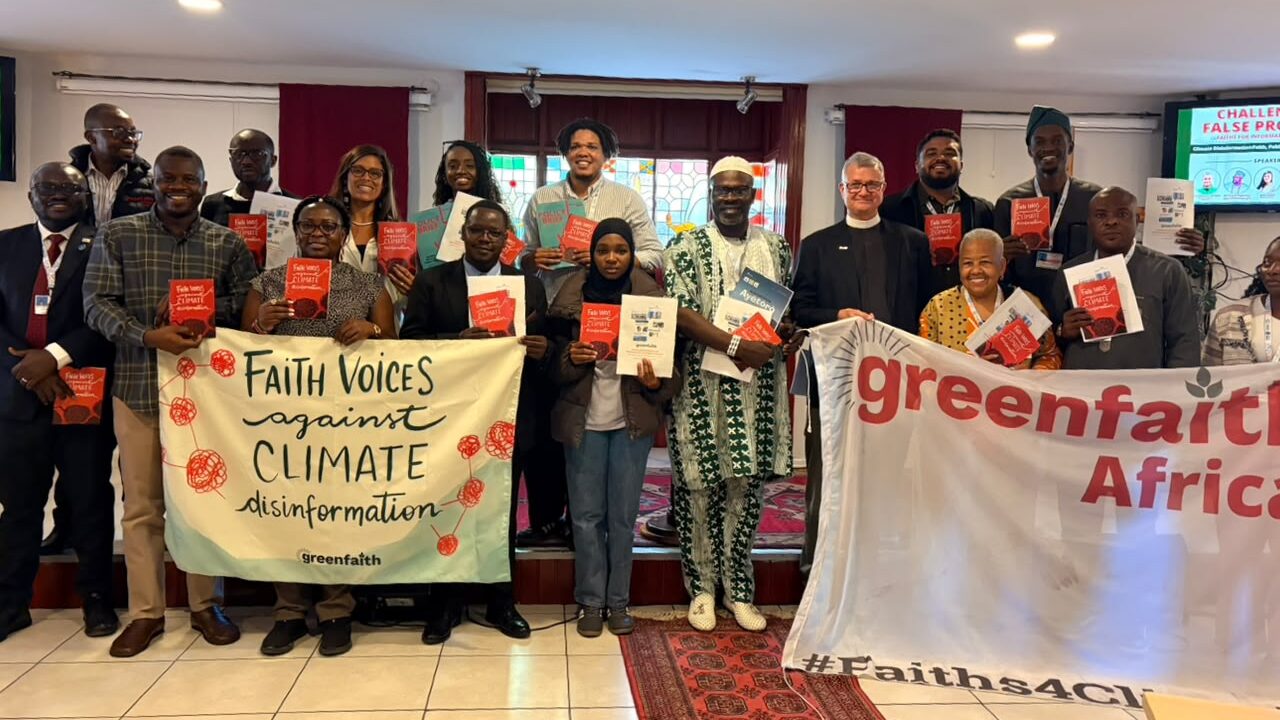
At the same time, climate disinformation has become a weapon against climate justice. It is not simply a battle over facts; it is a battle over power, public trust, accountability and the future of our people. When communities are told that renewable energy cannot work in Africa, that fossil-fuel expansion is the only route to development, or that climate action is merely a Western agenda, we must ask: whose interests are these narratives protecting? Disinformation increasingly works by discrediting solutions, confusing the public, weakening political will and shielding the status quo not only by denying that climate change exists.
At GreenFaith Africa, we see climate crisis through the experiences of communities, people of faith, women, young people and those living on the frontlines of environmental destruction. False narratives can undermine local organising, distort public debate and silence people demanding accountability. The UN-backed Global Initiative for Information Integrity on Climate Change announced new priorities at COP31 on AI-generated climate information and transparency in digital advertising. Germany committed €2 million to the Global Fund for Information Integrity, while 29 countries and the European Union had endorsed the Belém Declaration. These are useful steps, but they must lead to transparency, independent journalism, media literacy and accountability for platforms, advertisers, governments and commercial interests that amplify climate deception.
Climate justice therefore requires information justice. Communities cannot meaningfully participate in decisions about energy, land, livelihoods or adaptation if they are denied credible information. We do not only need climate finance; we need the truth, accessible to everyone. The greatest danger of climate disinformation is not only that it makes people believe a lie; it is that it makes governments comfortable with delaying the truth.
COP31’s second week must now deliver a people-centred Just Transition Mechanism, measurable and accessible adaptation finance, stronger support for Loss and Damage, and safeguards for the integrity of climate information. Africa is not short of sunlight, community knowledge or people ready to lead. What remains missing is fair access to finance, technology, decision-making and truthful public information.