
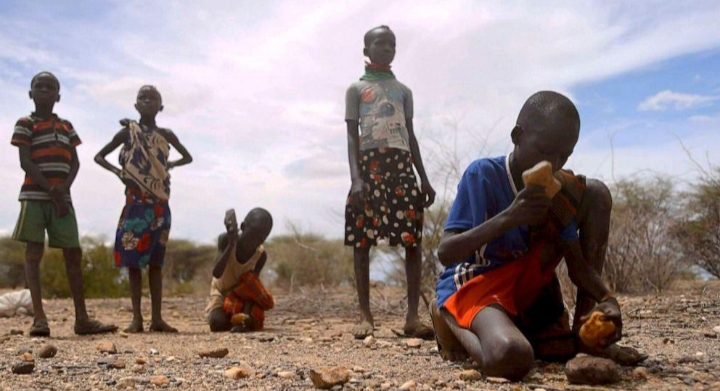
When a river floods and bursts its banks or flooded water recedes or when scorching drought hits a community or a small-scale farmer, it does not take into consideration who is richer or poorer. However, the poorest person is likely to face more devastating impacts and loose substantially given higher vulnerability, risk and lower capacity.
To start us of, vulnerability is a condition or characteristic that make people or communities and/or systems susceptible to the damaging effects of a hazard. A hazard on the other hand is anything with the potential to cause harm, injury, or adverse effects to people, property and environment. Risk is the likelihood of harmful consequences and losses resulting from an interaction between a hazard, exposure, vulnerability and capacity. Exposure in this context means the presence of people, property or assets within hazard prone areas. Ultimately, capacity is the strengths, resources, knowledge, skills and abilities available within individuals or a community or a society to deal with a disaster, risk, vulnerability or exposure.
Climate change does not only affect our weather patterns. Overtime, climate change builds up to cause devastating disaster such as prolonged droughts, floods, rising temperatures and environmental degradation. Its also reshapes our lives in different ways, widens inequality extensively and tests our dignity as human beings. Let me give you an example. A pastoralist watching all his flock die as a result of heat or floods or a rural child in an African village who quietly watches education slips away from them because of a flooded school or inability of the parents to afford his or her school fees as a result of failed season demonstrates climate change linkages with disasters and social protection. But let’s get a bit deeper.
Climate Crisis, Disaster Risk and Social Protection – the relationships
Though many would argue that the relationship between climate change, disaster risks and social protection is far-fetched, the nexus is practical and matters. Statistics from the UNDRR Website indicate that In the period 2018 to 2023, the Horn of Africa experienced the longest dry season of its time. Now, whether you would want to describe this as climate change or a disaster, the impacts set the records straight. Out of the phenomenon, pastoralist communities in Rift Valley and Northern Kenya (Garissa, Turkana, Marsabit, Isiolo, Mandera, Samburu amongst other counties) lost about 2.6 million livestock. Farmers on the other hand, collectively lost a big number of agricultural produces which led to more than 23 million people facing acute food insecurity. In Somalia, 43,000 deaths were recorded as a result of the extreme heat, drought related hunger and diseases, with children under 5 being the most affected.
As a result of the phenomenon, WFP (World Food Program) urgently called for USD 2.4 billion to support 8.8 million people affected by the drought with life-saving relief, IOM (International Organization for Migration) co-led the Rapid Response Fund (RRF) to provide emergency shelter, essential non-food items, and water treatment chemicals to drought-affected populations, the Somalian government, through the SURP-II program provided monetary assistance, health kits, and emergency water supplies, and the World Health Organization collaborated with local forces to combat diseases like cholera and measles, distributing Vitamin A and vaccination campaigns. These interventions aimed to alleviate hunger, improve water access, and support health services in response to the severe drought conditions.
Directly or indirectly, the nexus is drawn from these response strategies. Directly, none of the responders addressed climate change. They addressed social protection needs and disaster risks such as health, food crisis, water shortages and or availability withing the region. This is a clear indicator that as climate change intensifies or worsens, the frequency and/or severity of hazards increase and so does it to social protection needs.
Integrated Response Approach: Climate Justice for Disaster Risk Reduction and Social Justice
While DRR works to prevent and reduce disaster risks before they become disasters, social protection cushions individuals and households from shocks and helps them recover while protecting their dignity and livelihoods. All this work together to create resilient communities that can anticipate, absorb, adapt to and recover from climate-related disasters. Guess what does the nearly the same thing? Climate justice!
Climate justice is the principle that climate change is not only an environmental issue but also a matter of fairness, equity and human rights. It is the equitable and fairness in treatment of people in addressing climate change, ensuring the most affected are protected and that those most responsible contribute more to solving the problem. This is a clear indication that the relationship between these three has significantly evolved over time (the past few decades). While it is good to pursue both individually, the pursuit for climate justice delivers beyond its jurisdiction.
Traditionally all these three aspects were viewed entirely differently and independently. Climate change was considered an environmental issue while DRR was considered emergency preparedness and post disaster planning and social protection was viewed as food aid, cash transfers, pensions and support of all the vulnerable groups within a community. Interactions between these three rarely happened which caused communities to rise with fragmented interventions that often-addressed disasters rather than their underlying causes.
However, the increasing frequencies and intensities of climate-related issues, disasters have vividly shown us that these three are very vitally interconnected. According to the National Conference on Climate Change and Social Protection “Kenya contributes to less than 0.1 percent of the global gas emissions”, yet it experiences majority of the adverse climate impacts in Africa as a whole. It’s approximated that 80 percent of Kenya’s landmass is classified as Arid and Semi-Arid (ASALS), supporting nearly a third of the population while 95 percent of agricultural produce largely depends on rainfall making livelihood largely vulnerable to changes in climatic conditions.
Following recent prolonged droughts its estimated around 2.5 million Kenyans suffer from hunger and malnutrition not forgetting water shortages in the early 2026, clearly showing how climatic hazards quickly mature into social and economic crisis. These statistics demonstrate that climate vulnerability and social vulnerability are pretty much inseparable. Consequently, our modern nexus largely recognizes that climate change creates hazards, DRR reduces the risk within those hazards and social protection helps in building resilient communities. Rather than all these aspects operating independently, they are now reinforced to work together in building resilience.
This integrated approach is vital for frontline communities in Kenya including pastoralists in Turkana, and other ASALS counties, small holder farmers dependent on rain to ensure produce, women and girls, children, PWD, older persons and people in low-income urban spaces. These vulnerable groups contribute less to climate change but bear the greatest burden through food insecurity, loss of livestock, displacement and interrupted education. The conference therefore emphasized that strengthening the nexus is important not only for DRM but also for advancing towards climate justice, reducing poverty and sustainable development.
As the climate crisis worsens, the relationship between the three sectors has switched from business as usual to business unusual approaches. This major transition recognizes that climate- induced disasters are becoming frequent and more severe and very unpredictable, making the traditional response mechanisms insufficient as compared to modern response. Under the business-as-usual approach, interventions were largely reactive in that: government, humanitarian assistance and partners largely responded only after disasters have stricken. Social protection mainly focused on poverty alleviation while DRR emphasized on disaster recovery and response. These interventions were short time solutions since they failed to address the root cause of the vulnerabilities within leaving communities on dependency on aids after every strike.
The business unusual adopts more proactive approaches and resilience focused approaches that integrate the three aspects. Rather than waiting for a disaster to strike, they anticipate for, strengthen resilience and reduce vulnerabilities before, during and after shocks. As highlighted during the conference the climate responsive strategies include:
- Anticipatory action: using climate forecasts and early warning systems to trigger early inventions such as cash transfers, livestock and food assistance before disasters occur.
- Adaptive and shock-responsive social protection: strengthening programs such as Inua Jamii Initiative and Hunger Safety program so they can expand rapidly during climate emergencies and protect vulnerable households.
- Climate information and early warning systems: delivering timely, impact-based weather information that enables the government and communities to prepare for hazards.
- Locally led adaptation: empowering communities to combine indigenous knowledge with scientific innovations to develop solutions that respond to local climate change.
- Climate finance and multi stakeholder partnerships: mobilizing investments and strengthening collaboration among governments, faith-based organizations, civil society development partners and local communities to support long term resilience.
- Inclusive climate justice: prioritizing women, youth, children, persons with disabilities, pastoralists and small-scale farmers who are disproportionately affected by climatic changes despite being the lesser contributors to global warming.
In conclusion, moving from business as usual to business unusual, is essential in the strengthening of climate change-social protection-DRR nexus. Instead of merely focusing on disasters, we can now shift our focus to anticipating, building resilience, protecting livelihoods and ensuring that no one is left behind in the face of changing climate. This vital shift not only reduces disaster loss but also promotes sustainable development and climate justice for vulnerable communities across Kenya.
| By Magdalene Hadhidha |